Active Reading vs Highlighting: Which Helps You Learn More?
September 14, 2026 · 6 min read
Listen to this post
Contents
- Active Reading vs Highlighting: At a Glance
- How Active reading and Highlighting Compare
- Active reading
- Highlighting
- What Is the Difference Between Active Reading and Highlighting?
- Highlighting Is an Action; Active Reading Is a Process
- When Highlighting Counts as Active Reading
- Does Highlighting Improve Reading Comprehension?
- Memory Is Not the Same as Understanding
- Relevance Determines Whether a Highlight Helps
- How to Turn Highlighting Into Active Reading
- Mark for a Question, Not for Comfort
- Add One Act of Thinking After Each Mark
- Return to Marks as Tests, Not Decorations
- Which Should You Choose: Active Reading or Highlighting?
- Frequently Asked Questions
- Q1: What is the difference between active reading and highlighting?
- Q2: Does highlighting improve reading comprehension?
- Q3: Is highlighting considered passive reading?
- Conclusion
Quick Summary: Active reading beats highlighting for learning because it forces you to question, paraphrase, and test recall, while highlighting alone mostly boosts memory, not comprehension. A meta-analysis of 36 studies found learner-made highlights improved memory more than understanding, so marks work best as signposts tied to questions or notes. To make highlighting active, mark only key claims, add a question or paraphrase beside each mark, and hide the text to answer from memory before rereading.
A paper can glow yellow and still leave its main claim unclear. Active reading wins because it makes you question, connect, and check your grasp. Researchers use highlights to tame hard text, but marks may only look like work. This evidence-led comparison shows where active reading beats highlighting and how active reading turns highlights into useful cues.
Active Reading vs Highlighting: At a Glance
| Active reading | Highlighting | |
|---|---|---|
| Core activity | Question, explain, connect, evaluate, and monitor | Select and mark text |
| Reader effort | High and sustained | Low to moderate, depending on purpose |
| Primary benefit | Deeper comprehension and transfer | Cueing and limited memory support |
| Risk | Can become slow without a clear purpose | Overmarking and illusion of understanding |
| Best use | Dense arguments, research, and learning | Relevant claims, evidence, and return points |
How Active reading and Highlighting Compare
Active reading
Active reading means reading with a purpose, then questioning, explaining, connecting, and checking your grasp as you go. It suits researchers and learners working through dense arguments, where deeper understanding and later use matter. Active recall and explanation support stronger learning than passive review, as research on retrieval practice notes.
Highlighting
Highlighting marks claims, evidence, or return points for later review. It helps readers keep attention on selected text, but it can feel productive without proving understanding. A meta-analysis of highlighting studies found learner-made highlights aid memory more reliably than comprehension.
What Is the Difference Between Active Reading and Highlighting?
Highlighting Is an Action; Active Reading Is a Process
Highlighting marks text. Active reading makes you question, connect, explain, and recall ideas. Princeton recommends turning headings into questions and summarizing arguments in your own words, not just coloring passages. Its active-reading guide frames this as a dialogue with the author.
| Method | What you do | Result |
|---|---|---|
| Highlighting | Mark a passage | Finds it later |
| Active reading | Ask, note, recall | Tests understanding |
When Highlighting Counts as Active Reading
Highlighting helps when each mark has a job:
- Label why it matters.
- Write a question beside it.
- Restate the claim from memory.
Highlight less, then explain more.
Also Read: 7 Mistakes You're Making with AI Note-Taking Apps (and How to Fix Them)
Does Highlighting Improve Reading Comprehension?
Memory Is Not the Same as Understanding
Highlighting can help you find a fact again. It does not, by itself, prove you understand the author’s claim, logic, or limits. A meta-analysis of 36 studies found learner-made highlights improved memory more than comprehension.
Treat a highlight as a question to answer later, not evidence of learning.

Relevance Determines Whether a Highlight Helps
Mark only text that serves your reading goal: a key claim, method detail, result, or caveat. Coloring whole paragraphs removes contrast. In one digital-reading study, highlight quality predicted literal comprehension and knowledge transfer, but highlighting alone did not improve every outcome. Selective highlighting research supports that distinction.
| Highlight choice | Likely value |
|---|---|
| Main claim tied to your question | High |
| Familiar definition | Low |
| Entire dense paragraph | Low |
Also Read: Blog: notes on reading and understanding | Omphalis
How to Turn Highlighting Into Active Reading
Mark for a Question, Not for Comfort
Highlight only claims you need to test. Ask: What does this prove, and why does it matter? Princeton’s active reading guide suggests turning headings and passages into questions.

Add One Act of Thinking After Each Mark
After each mark, do one thing:
- Paraphrase it in your own words.
- Name its evidence.
- Link it to a prior idea.
A highlight without a response is a bookmark, not learning.
Return to Marks as Tests, Not Decorations
Hide the text and answer your question from memory. If you cannot explain it, reread the passage and revise your note. This effort helps build stronger recall.
Also Read: Best Read-Later Apps That Actually Help You Finish What You Save (2026)
Which Should You Choose: Active Reading or Highlighting?
Choose active reading for anything you need to explain, apply, or remember. Set a question, pause after each section, and state the claim and evidence in your own words. UNC’s guidance supports this deeper engagement.
Use highlighting only as a light marker after reading a full paragraph.
Highlighting shows where to return. Active reading tells you whether you understand.
- Mark one key phrase.
- Add one question or brief note.
- Test recall before rereading.
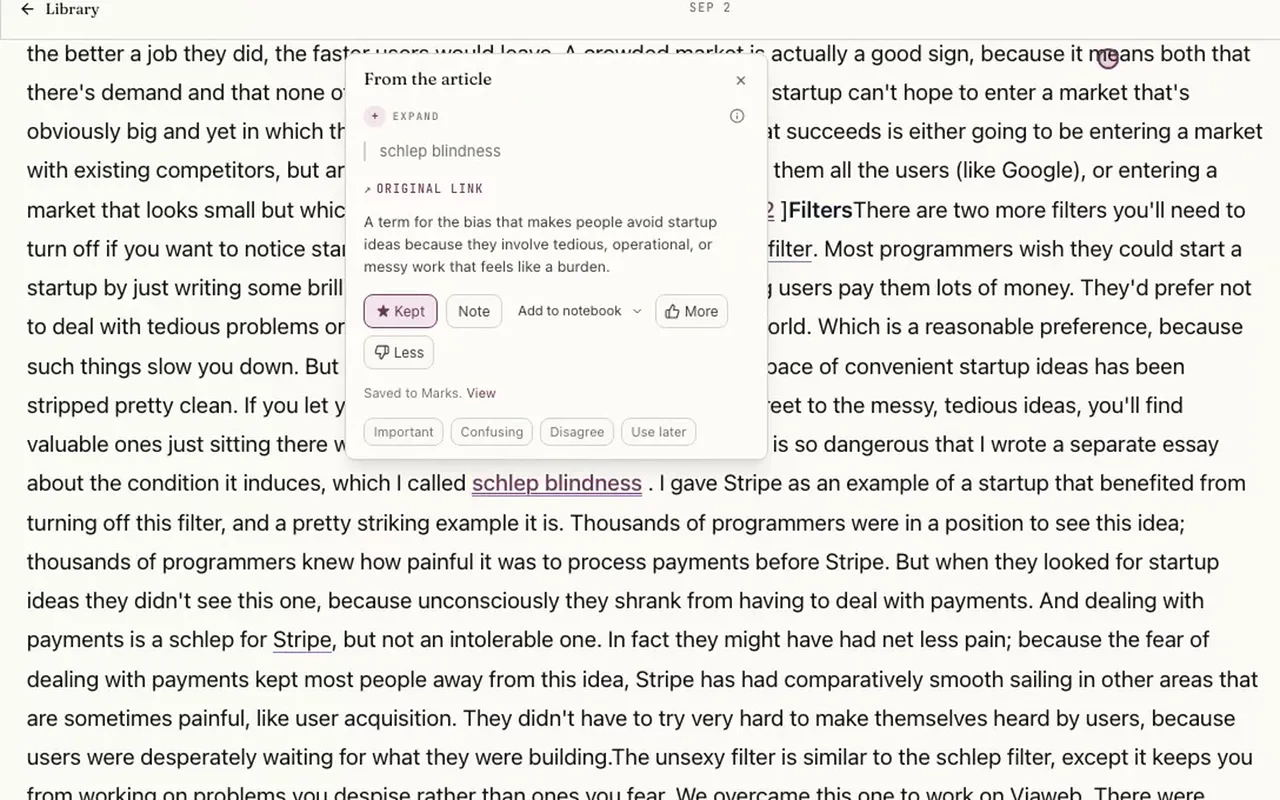
Turn passive highlights into useful notes and links. Try Omphalis to read closely, clarify hard passages, and keep what matters connected.
Frequently Asked Questions
Q1: What is the difference between active reading and highlighting?
Active reading asks questions, explains ideas, and tests recall. Highlighting only marks text.
Q2: Does highlighting improve reading comprehension?
Yes, if you mark sparingly and restate why each passage matters.
Q3: Is highlighting considered passive reading?
Usually, yes. It becomes active when each mark supports a note, question, or review.
Conclusion
Use highlights as signposts, not study. Questions, paraphrases, and recall build understanding, while UNC guidance warns against mistaking familiarity for learning.