Course builder
Turn a long document into a course.
Choose a long document you saved, set the level and what you want from it, and build a private course whose lessons take you through that source. Catalog courses, built from openly licensed sources with every source credited, are free to read on every plan.
Start free
30-day trial, no card required. Includes 600 comprehension units, 200 Ask voice minutes and 15 assistant answers a day. After that, Free stays free. See plan allowances.
Updated
Can you see where a catalog course comes from?
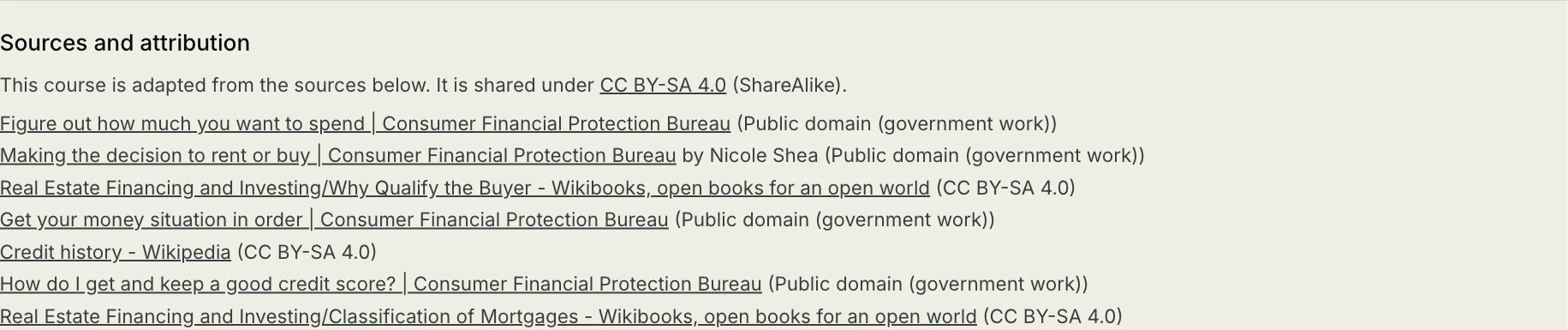
A catalog course brings openly licensed sources into a teaching order. This catalog course lists nine reads, including material from the Consumer Financial Protection Bureau, Wikibooks, and Wikipedia. The source names are visible before you begin the lessons.

How do you follow a catalog lesson back to its source?
Catalog lessons use passages from the source material. The attribution lists the original works and their licences, so you can see where the course came from and open those sources yourself.
Can you see the cost before a course is built?
Choose From a document, pick one of your long saved items, and set the level and what you want from it. The estimate in units appears before the build starts, and it needs at least about 160 units left in your monthly allowance.
Reading catalog courses is included on every plan. Building a private course from a document is included on every plan above Free, including the 30-day trial. The course is private to you and read-only in the lesson reader, so Ask is not available inside it. Building from a topic you type is open only to a small invited group for now.
What else should you know about the course builder?
- Who can build a course in Omphalis?
- Reading catalog courses is included on every plan. Building a private course from one of your long saved documents is included on every plan above Free, including the 30-day trial, and uses units. Building a course from a topic you type is open only to a small invited group for now.
- How do you build a course from a document?
- Open Build a course, choose From a document, pick one of your long saved items, set the level and what you want from it, and review the estimate in units before it starts. The course is private to you and read-only in the lesson reader: you can read it, but Ask is not available inside it.
- What does building a course cost?
- The estimate in units appears before anything starts, and building needs at least about 160 units left in your monthly allowance. Free has no course building, so a plan above Free or the trial is needed.
- Do catalog courses cost anything to read?
- No. Catalog courses are built from openly licensed sources, each source is credited with its licence, and they are free to read on every plan.
Start with one thing you saved.
Drop in the piece you keep postponing. Give it a few minutes.
The free plan is real and stays free. See pricing
Start free
30-day trial, no card required. Includes 600 comprehension units, 200 Ask voice minutes and 15 assistant answers a day. After that, Free stays free. See plan allowances.
Written by Omphalis teamLast updated