Best Read-Later Apps That Actually Help You Finish What You Save (2026)
August 3, 2026 · 11 min read
Listen to this post
Contents
- Quick Comparison
- What to know about read-later apps
- 1. Omphalis
- 2. Readwise Reader
- 3. Recall
- 4. Matter
- 5. IKI
- 6. Instapaper
- Honourable Mentions
- How to choose the right read-later app
- Frequently Asked Questions
- Q1: What features define the best read-later apps in 2026 for active knowledge management?
- Q2: How does AI integration improve the effectiveness of read-later apps like Noverload and Readwise?
- Q3: Which personal knowledge management tools support multi-format content like PDFs, videos, and newsletters?
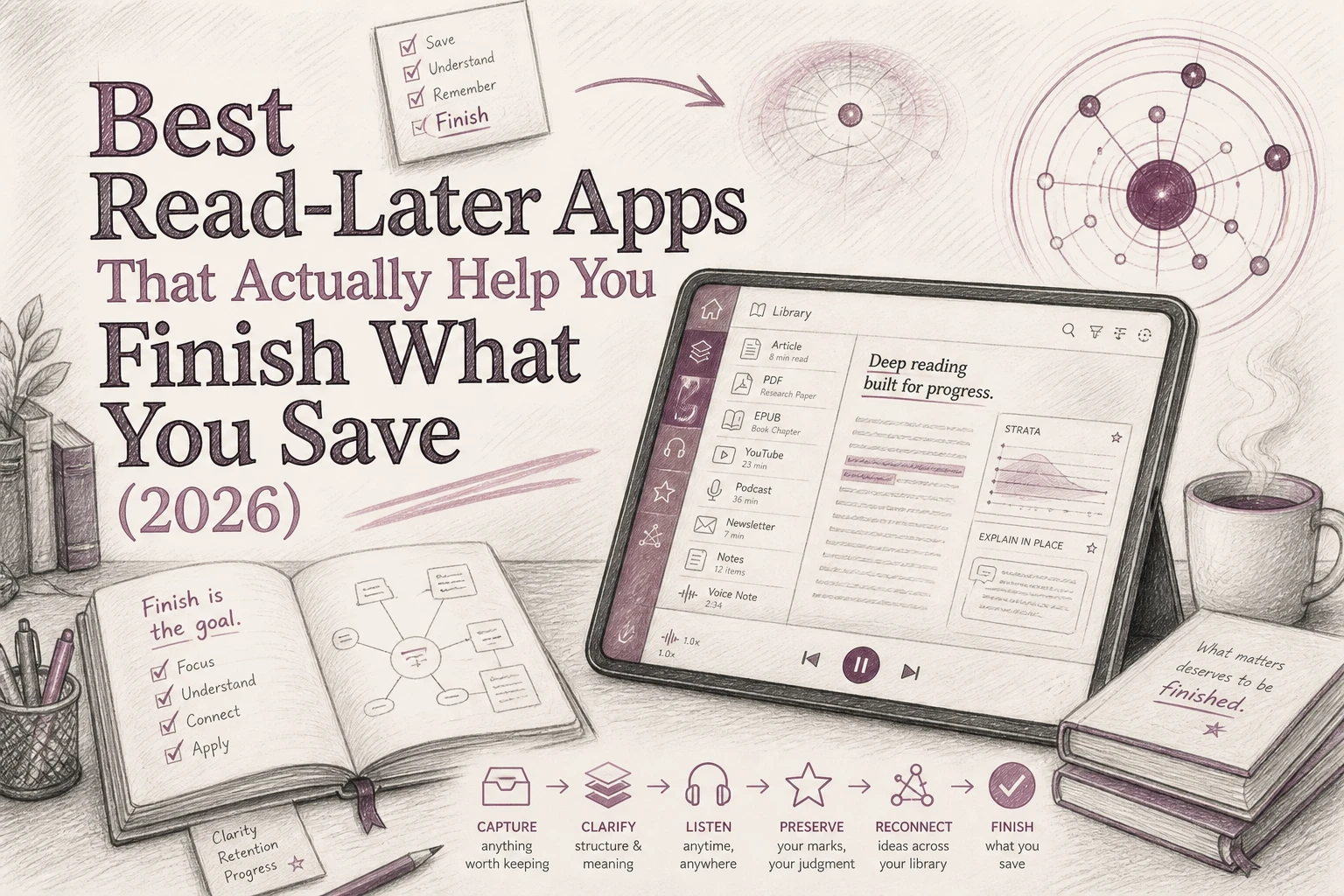
Quick Summary: Most read-later apps just store links, but the best ones in 2026 help you actively understand and revisit saved content. Omphalis stands out by supporting long-term, connected knowledge with AI that clarifies and reconnects ideas, making it easier to finish reading and use what you save. Other top apps like Readwise Reader and Recall focus on highlighting, annotating, and turning saved material into study tools, catering to serious learners and researchers.
Your backlog is not growing because you lack ways to save articles. It grows because most Read Later Apps make capture easy and follow-through hard. The gap shows up fast: articles, PDFs, newsletters, and videos pile up, but little turns into reusable knowledge.
This guide ranks the Best Read Later options for people who read for work and learning, not just for casual browsing. The best Reading Apps do more than store links. They help you return, focus, search, and connect what matters. That is the difference between basic Read Later Tools and systems that support real reading.
We reviewed Read Later Apps, Reading Apps, and Best Read Later choices based on real workflows in 2026: how well they Save Articles, handle highlights, support video and PDFs, improve Article Organization, and act like useful Personal Library Apps, Research Reading Apps, Content Clipping Apps, and better Article Management systems.
Quick Comparison
| Tool | Best for | Capture formats | Comprehension features | Organization |
|---|---|---|---|---|
| Omphalis | Active comprehension and connected knowledge keeping | Articles, PDFs, and other saved material when used as a library system | AI that orients, clarifies, preserves, and reconnects | A deliberate, connected home for kept content |
| Readwise Reader | Active readers who highlight and annotate | Articles, newsletters, RSS, PDFs, EPUBs, videos | Ghostreader, highlighting, text-to-speech, full-text search | Readwise sync and filtering tools |
| Recall | Multi-format knowledge capture and recall | Articles, PDFs, videos, podcasts, notes | AI summaries, chat, listen mode, quizzes | Smart tags and automatic knowledge graph connections |
| Matter | Newsletter readers and polished long-form reading | Articles, newsletters, RSS, PDFs, YouTube | Text-to-speech, highlights, AI Co-Reader on premium | Unified inbox, tags, and subscriptions |
| IKI | Researchers and teams doing deep knowledge work | Links, PDFs, videos, notes | AI assistant, research co-pilot, reasoning support | Auto-tagging, knowledge threads, and library structure |
| Instapaper | Minimalist article reading | Articles, videos, PDFs with Premium | Notes, highlights, summaries, text-to-speech | Folders, tags, archive, and reading list |
What to know about read-later apps
Most Read Later Apps still do one basic job: save a link and stack it in a queue. That helps for capture, but not for finishing. In 2026, the gap is clearer. Some tools act like storage bins. Others help you return, understand, mark what matters, and reuse it later.
That split matters if you read for work, research, or long projects. The Best Read Later choice is not the app with the most saved links. It is the one that helps you turn scattered articles, papers, and notes into a library you can actually use.
The best Read Later Apps reduce backlog friction. The Best Read Later tools also support comprehension, recall, and follow-up without making reading feel like admin.
1. Omphalis
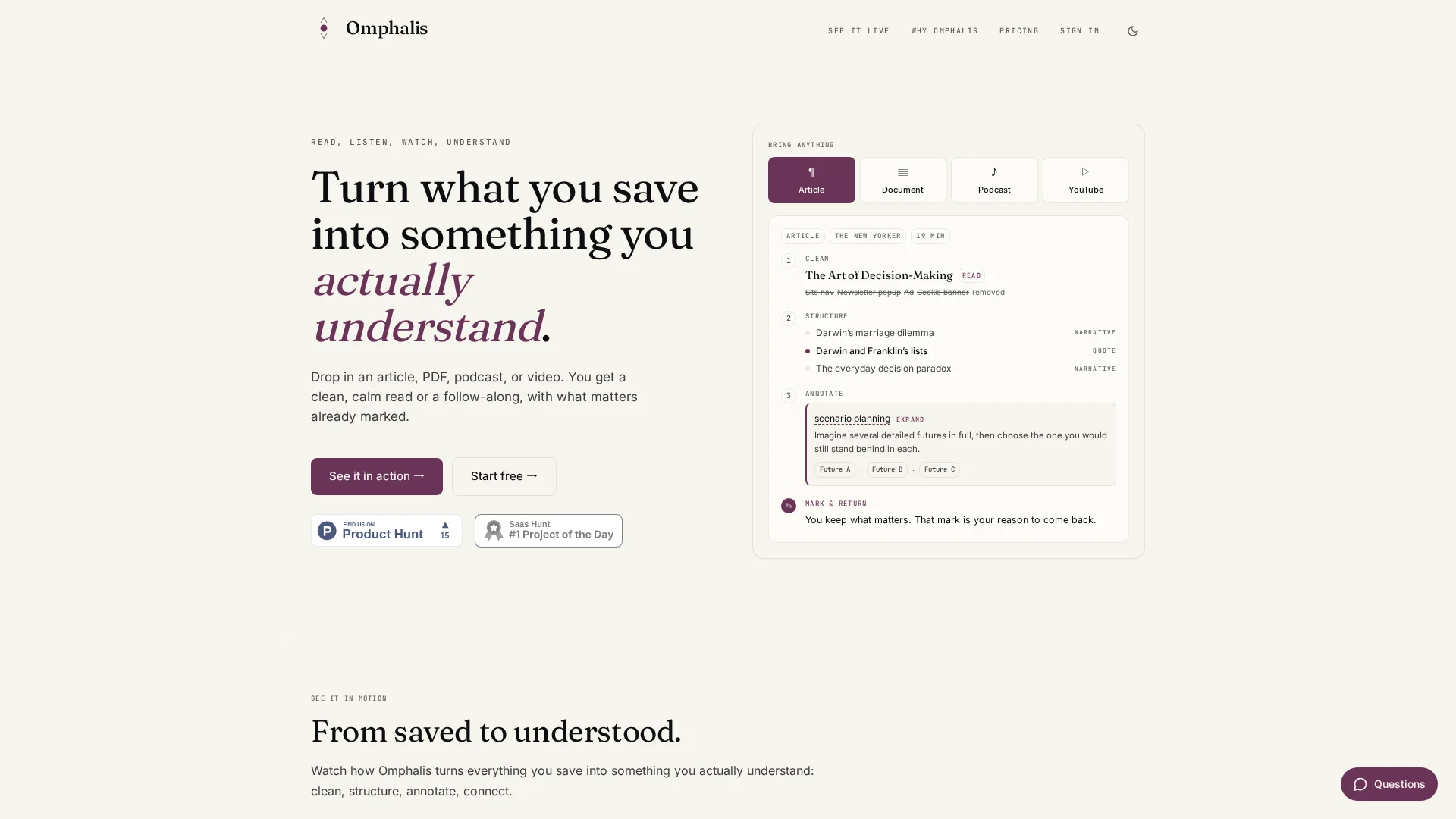
Omphalis is not a passive read-later inbox. It is an active-comprehension home for deliberately kept reading, built for people who still want to read, judge, and decide what matters. Its product page centers that idea, and its pricing page shows a library model that keeps what you save available over time.
 Highlights
- Designed for deliberate keeping, not casual bookmarking
- Built around a connected library for articles, PDFs, and other saved material
- Uses AI to orient, clarify, preserve, and reconnect without replacing your reading
Specs
- Best for: Active comprehension and connected knowledge keeping
- Capture formats: Articles, PDFs, and other saved material
- Workflow fit: Researchers, founders, engineers, and serious learners
Pros
- Treats saved content like a living library
- Strong fit for hard material and long-term reference
Cons
- You still need to review and decide what matters
- Works best with clear habits
It ranks first because this list is about finishing what you save, and Omphalis matches that goal most directly.
If you're a founder using Omphalis to hold onto research between launches, Nick Launches' guide to 100+ startup launch directories is a useful bookmark for when it's time to get the word out.
Last updated: August 2, 2026
Also Read: Ask
2. Readwise Reader
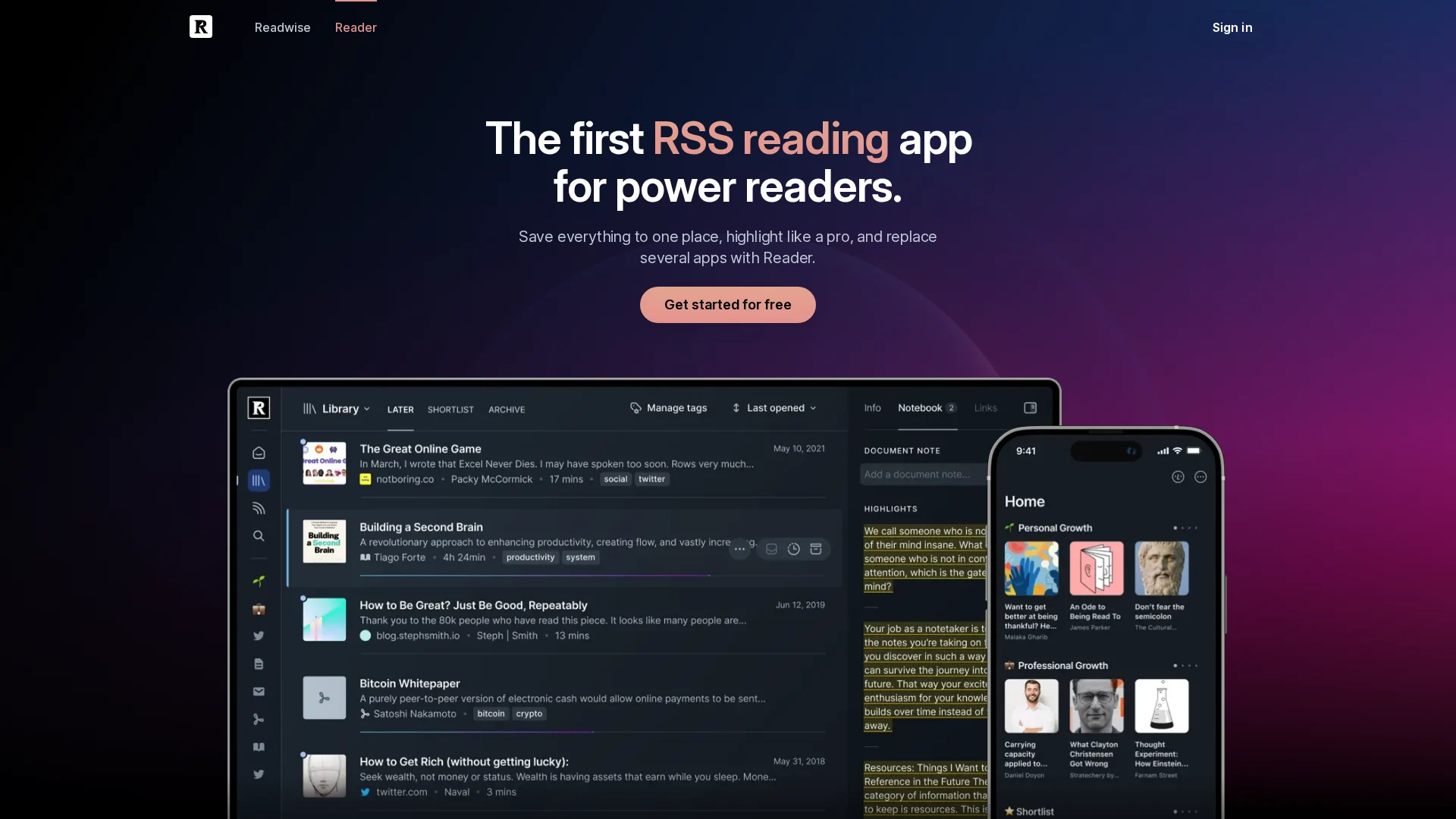
Readwise Reader is one of the strongest picks for people who do more than save links. It earns its place because it combines broad capture, serious annotation, and a reading workflow built for revisiting material across formats, as shown in Readwise Docs.
 Highlights
- Supports articles, newsletters, RSS, PDFs, EPUBs, and videos.
- Ghostreader can define terms, answer questions, and simplify hard passages.
- Highlights and notes sync into the wider Readwise system.
- Offline reading and cross-device use fit heavy research workflows.
Specs
- Best for: Active readers who highlight and annotate
- Capture formats: Articles, newsletters, RSS, PDFs, EPUBs, videos
- Comprehension features: Ghostreader, highlighting, text-to-speech, full-text search
- Organization: Readwise sync and filtering tools
Pros
- Excellent for serious reading and migration from Pocket or Instapaper.
Cons
- Rich feature set and pricing can feel heavy for casual savers.
It ranks here because it helps you finish, mark up, and return to what you save.
Last updated: August 2, 2026
3. Recall
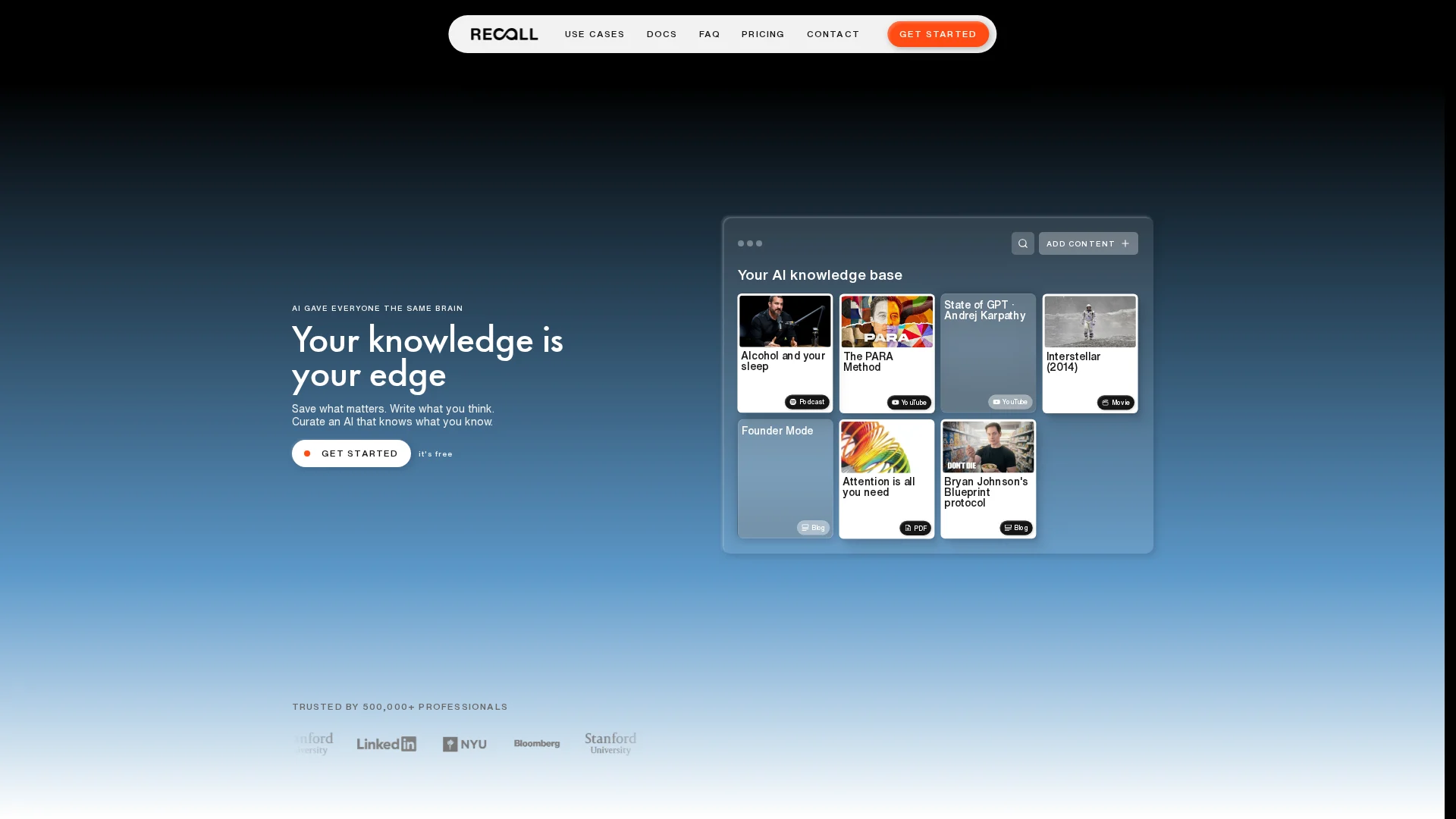
Recall starts as read-later, but it quickly turns into a study system. It saves articles, PDFs, videos, podcasts, and notes, then adds summaries, links, chat, and quizzes across your library, as shown in Recall’s documentation and its Chrome Web Store listing.
 Highlights
- Instant AI summaries on save
- Smart tags and automatic connections
- Library-wide chat across saved sources
- Quizzes and spaced repetition for retention
Specs
- Best for: Multi-format knowledge capture and recall
- Capture formats: Articles, PDFs, videos, podcasts, notes
- Comprehension features: AI summaries, chat, listen mode, quizzes
- Organization: Smart tags and automatic knowledge graph connections
- Workflow fit: People who want saved content to become study material
Pros
- Strong automation after saving
- Great for mixed-media libraries
- Retention features go past simple reading
Cons
- Feels more like a knowledge base than a simple queue
- Can be too much for casual readers
- AI-first workflows still need review, especially with spaced repetition settings and stages
Recall ranks this high because it solves the real problem after saving, not just the save itself.
Last updated: August 2, 2026
Also Read: Compare
4. Matter
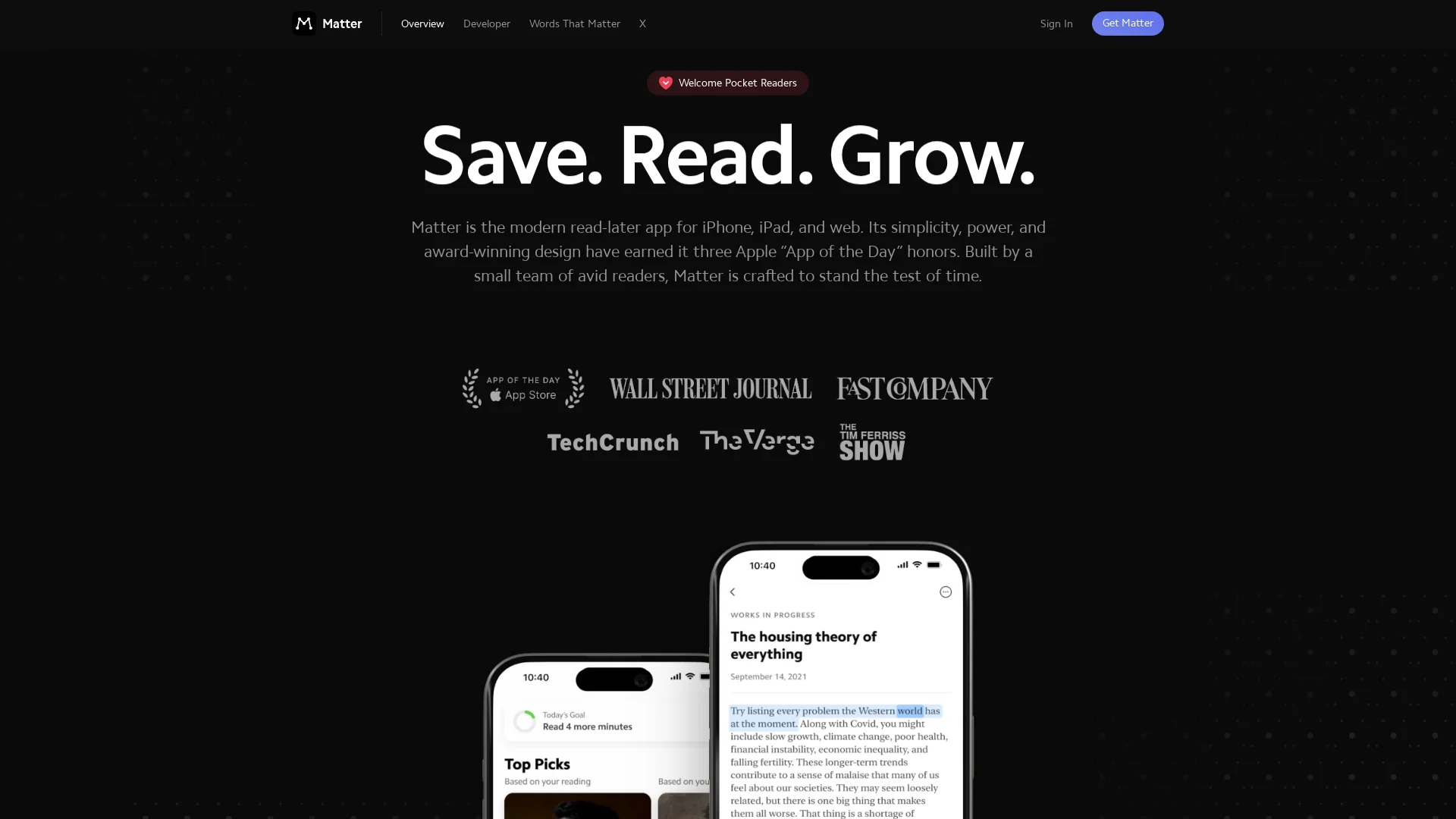
Matter is a polished reading inbox for people who save a lot and want to actually read it. It pulls articles, newsletters, RSS, PDFs, and YouTube into one clean flow, with natural text-to-speech and strong Apple-first design, as shown on the App Store listing.
 Highlights
- Unified inbox for newsletters, RSS, saved articles, PDFs, and YouTube
- Natural text-to-speech and Kindle support
- Highlights, notes, and export options
- Strong iPhone, iPad, and web setup
Specs
- Best for: Newsletter readers and polished long-form reading
- Capture formats: Articles, newsletters, RSS, PDFs, YouTube
- Comprehension features: Text-to-speech, highlights, AI Co-Reader on premium
- Organization: Unified inbox, tags, and subscriptions
Pros
- Beautiful reading experience
- Excellent for newsletters
- Simple enough for daily use
Cons
- Android support is still limited on the Chrome Web Store page
- Lighter for research-heavy workflows than Readwise Reader or Omphalis
It ranks here because it cuts friction without feeling bare.
Last updated: August 2, 2026
5. IKI
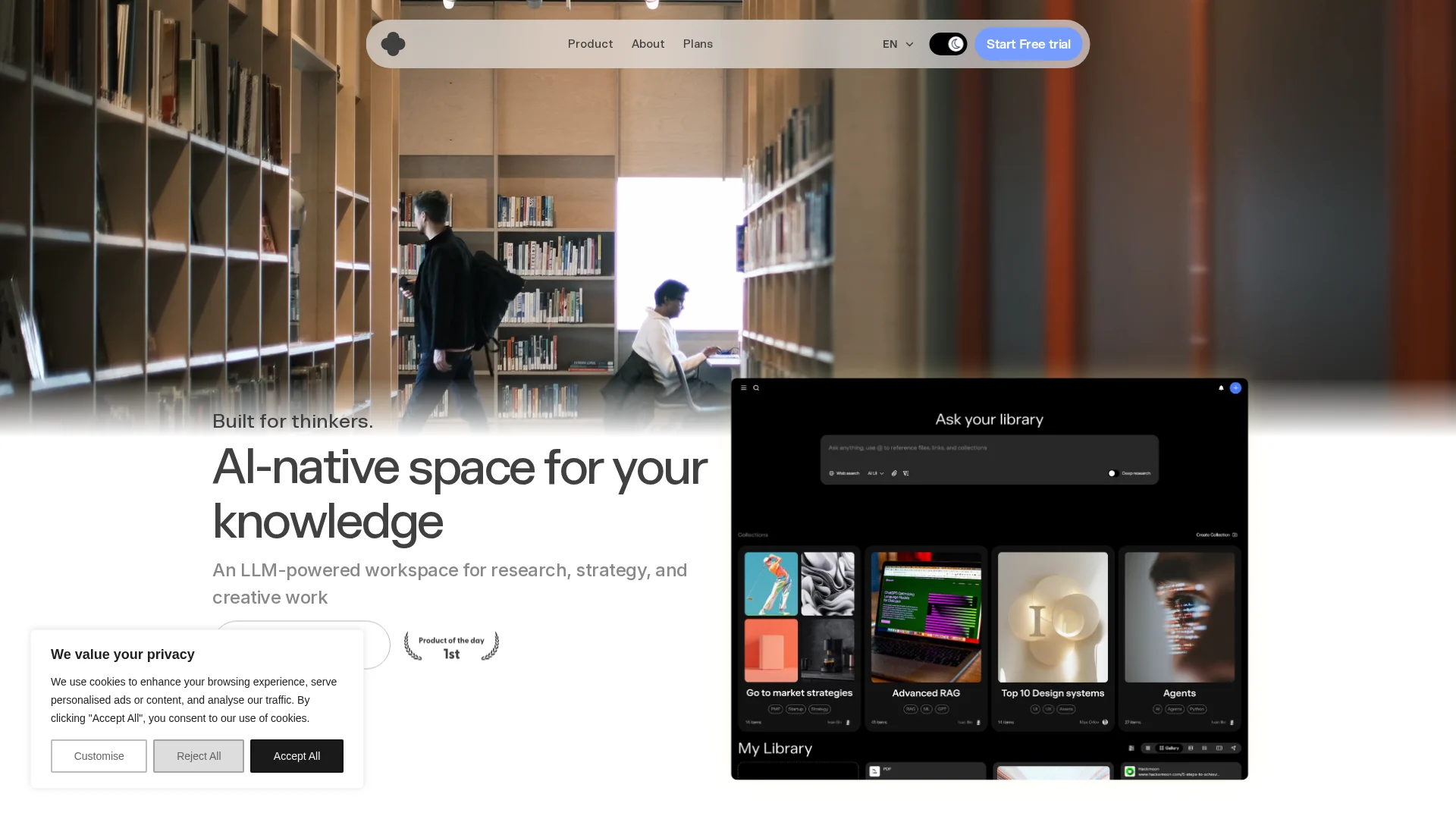
IKI fits people who treat saved reading as part of a research system, not a backlog bin. Its site positions it as an AI-native workspace for research, strategy, and deep thinking, with team spaces and a library built around connected knowledge.
 Highlights
- One-click web capture with notes through its Chrome extension.
- AI help for clarifying long reads, plus research support inside its research co-pilot.
- Auto-tags, knowledge threads, and shared team spaces.
Specs
- Best for: Researchers and teams doing deep knowledge work
- Capture formats: Links, PDFs, videos, notes
- Comprehension features: AI assistant, research co-pilot, reasoning support
- Organization: Auto-tagging, knowledge threads, library structure
- Workflow fit: Shared research workspace
Pros
- Strong for source-heavy, team-based reading.
Cons
- Less familiar than mainstream read-later apps.
It ranks here because it goes beyond storage and supports active research workflows.
Last updated: August 2, 2026
Also Read: About
6. Instapaper
Instapaper still works because it stays out of your way. It gives you a clean place to save articles, read later, and focus without extra clutter. Highlights
- Fast capture from browser and mobile.
- Clean reader view strips clutter for easier focus, as shown in Instapaper's reading docs.
- Notes, highlights, and text-to-speech help you keep moving through saved pieces.
- Kindle and Kobo support add useful device flexibility.
Specs
- Best for: Minimalist article reading
- Capture formats: Articles, videos, PDFs with Premium
- Comprehension features: Notes, highlights, summaries, text-to-speech
- Organization: Folders, tags, archive, reading list
- Workflow fit: Users who want simplicity over heavier AI tools
- Extra detail: Premium adds PDFs, full-text search, Kindle digests, and playlists, according to Instapaper Premium overview.
Pros
- Very easy to use
- Strong reading-first design
- Good e-reader support
Cons
- Less advanced than newer knowledge tools
- Better for articles than a living research library
It ranks here because saving and finishing articles still feels easy.
Last updated: August 2, 2026
Honourable Mentions
These tools are worth a look, but they miss the top tier for readers who want stronger finish rates, deeper understanding, or a better long-term reading flow.
- Glasp - Strong for highlights, exports, and public learning around what you read.
- NotebookLM - Great for source-based study and synthesis, less suited to a classic read-later inbox.
- Raindrop.io - Excellent bookmark organization and visual collections, lighter on reading support.
- Scholarcy - Useful for paper digestion and reference capture in academic workflows.
- Explainpaper - Best for unpacking dense passages in research PDFs.
- ChatPDF - Handy for quick document Q&A, but narrower than a full read-later system.
How to choose the right read-later app
Pick the app that matches how you really read, not how you wish you read. Use these filters:
Match your source types. If you save only web articles, Instapaper or Matter may be enough. If you save PDFs, newsletters, videos, podcasts, and research papers too, Omphalis is the stronger fit because it handles a mixed library in one place.
Judge the reading experience, not just capture speed. Fast saving is easy. Finishing is harder. If you highlight, annotate, and return to hard material, choose a tool with strong reading UX, preserved marks, and export options. Omphalis stands out here because it supports active reading, in-place explanations, and user-controlled marks.
Stress-test backlog recovery. Big backlog? You need semantic search, auto-organization, and AI help that keeps the library usable. Omphalis is the clearest pick if you want AI to orient and reconnect ideas, not replace your judgment.
Check your real device flow. Make sure your main setup works well on iPhone, iPad, Android, or web before you commit.
Verify migration and retention. If you are leaving Pocket or Omnivore, confirm imports and exports first. If you want to remember what you save, favor tools that bring material back into view through notes, quizzes, or spaced review.
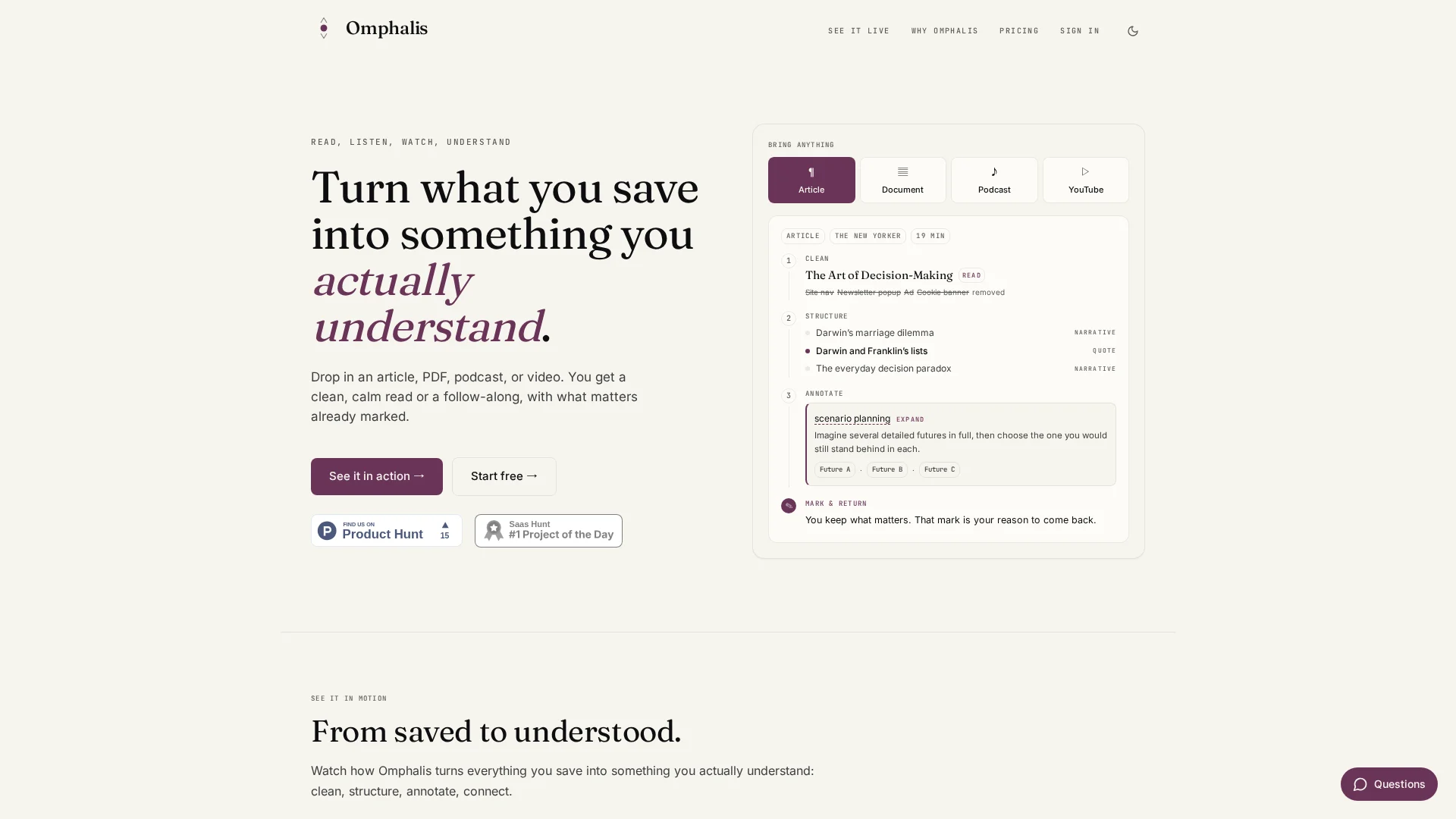
If your read-later list keeps growing while your understanding stays flat, try Omphalis. It helps you actually work through saved articles, papers, podcasts, and videos with in-place explanations, listening, structure cues, and preserved marks so you keep reading and finish more of what matters.
Frequently Asked Questions
Q1: What features define the best read-later apps in 2026 for active knowledge management?
The best ones go past saving. Look for clean capture, highlights, notes, search, cross-device sync, offline reading, and ways to revisit key ideas. Strong tools also support PDFs, newsletters, audio, and links between saved items.
Q2: How does AI integration improve the effectiveness of read-later apps like Noverload and Readwise?
AI helps most when it clears friction, not when it replaces reading. Good AI explains hard passages, pulls themes, and helps you refind ideas later. Omphalis fits this better than passive queues because it supports active comprehension.
Q3: Which personal knowledge management tools support multi-format content like PDFs, videos, and newsletters?
Tools in this space vary a lot. Omphalis is built for mixed formats, including papers, PDFs, videos, podcasts, newsletters, notes, and voice notes. Readwise Reader, NotebookLM, and Matter also support multiple formats, but with different strengths.