Notes from audio: why listening leaves less behind than reading
Updated · 15 min read
Listen to this post
Contents
- Introduction
- Practical takeaways you can apply
- Key concepts
- Expert Insight
- Conclusion
- How can you pair formats for common tasks?
- What concrete steps can you implement today?
- How does this play out in real world scenarios?
- What do data points and expert perspectives say?
- What common mistakes and caveats should you watch for?
- How does Omphalis support this approach?
- From theory to practice: what does a simple routine look like?
- Frequently asked questions
- Do you remember less from audio than from reading?
- How do you take notes while listening?
- Is reading always better for retention than listening?
- Can you improve audio retention without switching to text?
- Should you always pair audio with a text version?
- References
TL;DR
- Listening and reading engage different brain processes; pairing audio with text supports comprehension, retention, and practical application rather than declaring a single winner.
- Use audio for immersion and flow, then switch to printed material to consolidate details, verify figures, and map concepts with precise structure.
- Employ a structured, cross-format workflow: start with concise audio, follow with a text companion, and end with retrieval exercises to strengthen memory and transfer to action.
Introduction
Today many people turn to listening as a main way to consume information. The question remains practical for readers: does listening leave less behind than reading?
At Omphalis we do not declare a winner between formats. We seek to understand how each mode shapes comprehension and retention, and how to map the moments that matter across content types.
Consider a busy professional who needs to digest a quarterly report. They might listen during a commute, then skim the document to verify figures.
In that scenario, listening provides accessibility, while reading reinforces precision. Omphalis helps you design experiences that blend both, so you capture both immediacy and accuracy without losing context.
Research shows that listening and reading engage the brain in different ways. The pace of spoken language sets a fixed tempo, which can influence how deeply you encode concepts. For instance, a 20 minute podcast on market shifts can embed narrative cues that aid memory of cause and effect, while a dense 8 page report might require slower, active reading to annotate figures and definitions.
Listening can also heighten narrative engagement and help you follow story arcs, which can aid recall when meaning depends on sequence and context. If you study a historical timeline via an audio documentary, the spoken cues help you remember the order of events, but a companion text with annotated dates strengthens the exact sequence.
Our approach grounds every claim in solid evidence. We note who conducted studies, the materials used, and the conditions under which comprehension is measured. The medium often interacts with the subject matter.
A biography, a case study, or a Shakespearean scene may reveal different strengths for listening than for reading, and vice versa. For example, complex legal text may benefit from rereading passages aloud to parse terminology, while a narrative poem may come alive through listening to rhythm and cadence.
Omphalis also brings real world checks into play. Imagine a sales briefing delivered as a short audio summary paired with an optional slide deck.
You can listen for the core points, then open the slides to verify numbers. This dual approach reduces cognitive load by separating meaning extraction from data verification, helping you retain both concepts and specifics.
Many readers want understanding that lasts, not just quick access. That means looking beyond whether you can answer a quiz or summarize a page.
It means tracking how ideas travel across sources, how themes connect, and how memory anchors form around notable moments in the text. Omphalis preserves those moments, links ideas across formats, and presents them in a navigable knowledge map you can act on later.
To deepen retention, you can apply concrete tactics. After a listening session, write a brief synthesis linking three key ideas to a real world example from your work.
Pause the audio at each milestone and create a one sentence takeaway. This turns listening into actionable knowledge rather than passive consumption.
In practice, a well designed content flow might look like this: start with a concise audio overview, then provide a structured text companion with highlighted terms, followed by a visualization that traces connections between ideas. Omphalis can generate such a scaffold automatically, making sure you have both the narrative thread and the reference anchors you need for later recall.
In addition to structure, you should account for cognitive load. If a podcast runs 25 minutes with rapid topic shifts, you may benefit from a segmented transcript or time-stamped highlights.
A text version should preserve headings, bullet lists, and glossary terms to support quick scanning. When you switch formats, keep core messages aligned so your memory reinforces across media rather than fights for attention.
Effective comparisons between listening and reading require explicit measurements. Track metrics like time to first recall, number of correct details after a delay, and ability to reconstruct a sequence of events.
Using Omphalis, you can test multiple formats on the same content and observe how the results converge or diverge. This empirical approach helps you decide where listening adds value and where reading remains essential.
We also acknowledge caveats and edge cases. Some subjects rely heavily on visuals or diagrams that are hard to capture in audio.
In those cases, listening should be paired with a complementary image or animation. Conversely, procedural tasks that require step by step verification may benefit from readable scripts or checklists that you can reference while performing the task.
Lastly, make sure accessibility and inclusivity. Not all listeners have same hearing capabilities, and not all readers process text at the same pace.
Offer adjustable playback speed, transcription options, and accessible font sizes. Omphalis designs content ecosystems that respect these variations, so you can tailor experiences to diverse audiences without losing rigor.
Practical takeaways you can apply
Define the moment you want each format to support. Is it initial exposure, deep learning, or long term recall?
Map outcomes to formats accordingly. For example, use audio for onboarding stories and visual summaries for procedural checklists.
Build paired packages for major topics. Create a 5 minute audio outline, a concise text brief, and a one page diagram. Link them so readers can switch modes without losing track of the central thread.
Measure retention with staggered recalls. Test recall after 24 hours, then after a week. Compare results across listening and reading to identify gaps in memory and adjust the content flow.
Use Omphalis to anchor moments. Tag memorable phrases, data points, and turning points so users can jump back to them when needed.
Be mindful of edge cases. If a topic relies on visuals, supply an accompanying image or schematic. If a procedure is complex, add a quick reference checklist alongside the audio or text.
By combining structured listening and precise reading, you can create durable understanding rather than fleeting familiarity. Omphalis provides the framework to orchestrate these formats into a cohesive learning pathway.
Key concepts

Understanding how listening and reading imprint information starts with pace, attention, and context. When you listen, you engage with a fixed tempo set by the narrator.
This can help you stay tethered to the material but may limit immediate repetition for detail based tasks. Reading, by contrast, lets you control the flow, skim for unfamiliar terms, and revisit tricky passages with a quick eye movement.
Comprehension is not a single skill. It depends on decoding the language, tracking narrative or argumentative structure, and mapping new ideas to what you already know.
Audiobook narration can illuminate emotion and timing, while printed text often clarifies structure through spatial cues like headings, margins, and page layout. Both paths require you to build a mental model of the material.
Spatial cues matter for memory. When you read, you create a physical reference frame on the page or screen, which helps anchor ideas to locations.
This spatial anchoring can aid recall later. Listening lacks those same cues, so retention often relies on narrative hooks, repetition, and how clearly the material maps to your existing knowledge.
Memory strategies translate differently across formats. For listening, taking notes during or after a listening session can convert transient auditory input into durable memory traces.
For reading, summarizing paragraphs, underlining key terms, and re-reading unfamiliar sections can reinforce learning. The goal is to use format appropriate tactics without sacrificing depth.
Attention is finite in both modes. Multi task environments degrade performance in both listening and reading, but the types of interference differ. When you listen, competing sounds or concurrent tasks can break the thread of the narrative.
When you read, interruptions often fragment your cognitive flow and slow continuous understanding. In practice, choose contexts that minimize these disruptions for the material you want to retain.
Story arc and argument structure matter for retention. Narrative material benefits from following a sequence and identifying turning points, while expository text gains from mapping claims, evidence, and conclusions.
Audio can emphasize pacing that clarifies transitions, but printed text helps you delineate sections and track causal links with precision. The best approach aligns with the material’s core structure, not the medium itself.
Retention is a function of how you encode content, not just how you receive it. Encoding involves processing meaning, linking it to existing knowledge, and creating retrieval cues.
Audio supports encoding through emotion and rhythm, while print supports encoding through explicit layout and the opportunity to re-express ideas in your own words. You can improve both by intentionally linking new concepts to familiar frameworks.
Quality of source matters. A well-narrated audiobook can convey nuance that dry prose might miss, but a densely argued essay on dense topics benefits from line by line scrutiny. Your choice should reflect the subject matter, your prior knowledge, and the moment you want to revisit the material for recall or application.
| Aspect | Listening | Reading |
|---|---|---|
| Pace control | Fixed by narrator | User controlled |
| Spatial cues | Lack of page cues | Page, margins, headings |
| Memory anchors | Narrative rhythm, emotion | Location-based roots, structure |
| Attention management | Susceptible to auditory distractions | Susceptible to visual distractions |
In practice, you don’t choose a single path. You sequence formats to fit the moment: listen for immersion during long narratives, then switch to print to consolidate details and test recall. Tools like e-readers can pair text with highlights, creating hybrid anchors that echo the benefits of both formats.
These concepts ground practical steps. Recognize when a passage relies on sequence, then lean into the audio for flow.
When precision matters, switch to text to dissect arguments, locate terms, and cross reference notes. The aim is a disciplined approach to comprehension that respects the strengths of each medium.
Expert Insight
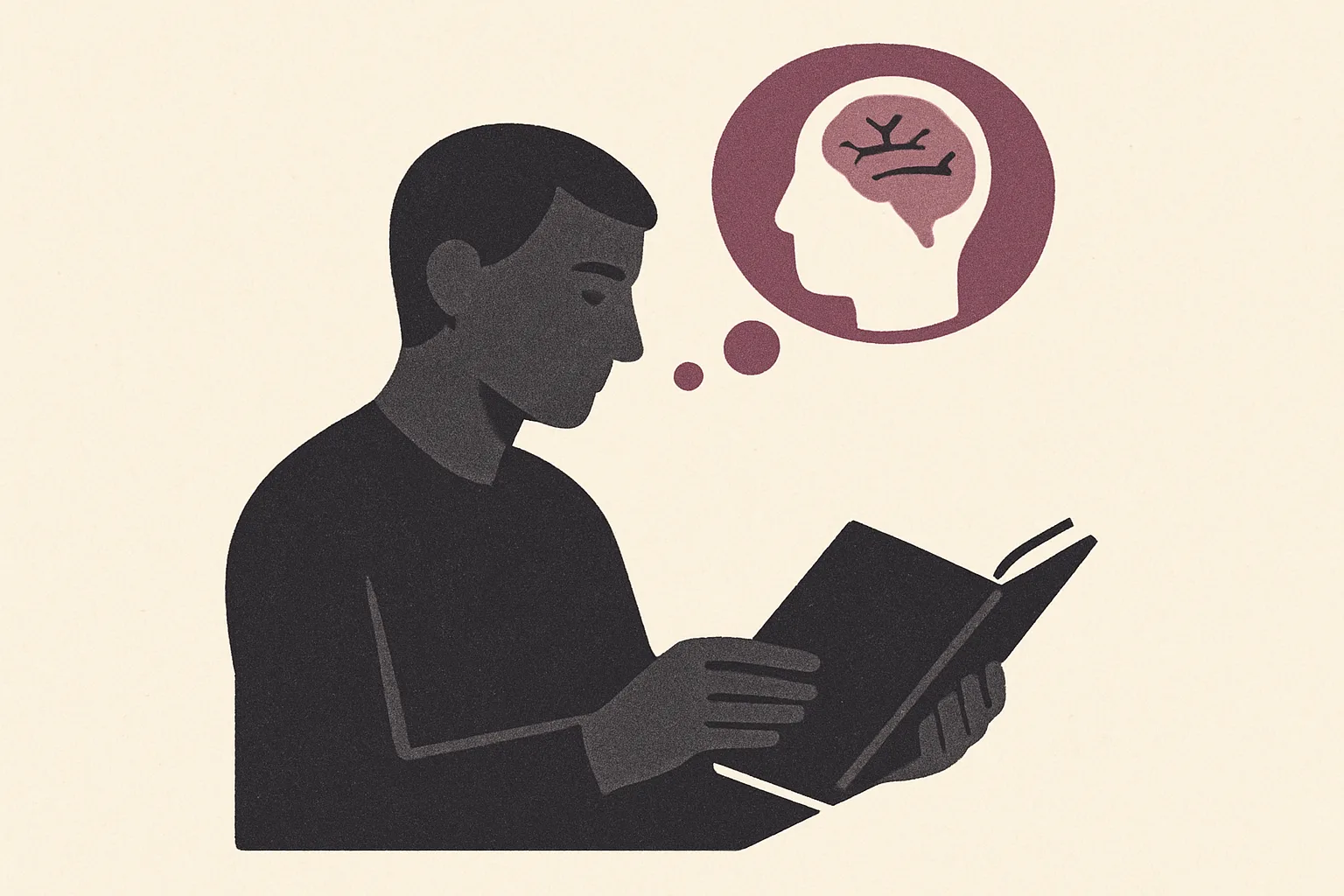
"There isn’t much of a difference between the brain network for reading and the brain network for language comprehension." — Nadine Gaab, Cognitive neuroscientist
Conclusion
Understanding how we engage with audio versus print helps you choose strategies that keep your chosen material alive in memory. The core idea is not to read less, but to encode more of what you selected to learn, regardless of format.
In short, the format matters less than the encoding step that follows it — a brief written or spoken synthesis after the fact is what turns exposure into memory.
You’ll benefit from treating each format as a distinct encoding tool. Audio can cue rhythm, emotion, and pacing, while print anchors ideas with visible structure and precise terms.
By designing your study around how you encode, you increase the odds that insights transfer to long term memory and practical use.
How can you pair formats for common tasks?
When you tackle a narrative heavy topic such as a company case study, begin with an audio version to grasp flow and decisions at a high level. Immediately follow with a printed outline that lists key actions, stakeholders, and outcomes. This two step approach helps you remember not just what happened, but why it happened and what could be learned for your own projects.
If your goal is to internalize a sequence of events, like a historical timeline, use audio to reinforce order through cadence. Then switch to print to annotate a chronological map, adding dates, sources, and cross references. You’ll create a narrative scaffold in your mind, then fill in the structural details that support recall during a discussion or presentation.
What concrete steps can you implement today?
- Set a learning objective for each session. Decide whether you want to remember concepts, sequences, or definitions, and choose the format accordingly.
- Use timed audio notes to capture the gist of a section. After listening, pause and transcribe a quick one paragraph summary in print. This cements both comprehension and recall.
- Create paired study sheets. For each major idea, write a brief summary in print and record a 15 to 30 second audio note highlighting why it matters and one real world application.
- Use headings and marginal notes in print. When you switch from audio, immediately add keywords, page numbers, and cross links to related topics so you can navigate quickly later.
- Practice recall aloud after reading or listening. Say the main points without looking, then verify against your notes. This strengthens retrieval pathways.
How does this play out in real world scenarios?
In a product strategy meeting, you might listen to a case study about a competitor’s launch. Let the audio capture the pace of decisions and the rationale behind pivots.
Then, in print, map those decisions to your own product roadmap, noting analogous risks and mitigations. The combination helps you remember the sequence and the reasoning, not just the facts.
In a university seminar, you could listen to a dense theoretical exposition. The voice cues can help you grasp abstract ideas, while a printed concept map clarifies how definitions interrelate. Later, you can test yourself with flashcards that pair terms with short audio clips of their definitions.
What do data points and expert perspectives say?
Studies in multimedia learning show that readers retain more when they actively process content across modalities rather than passively consuming a single format.
For example, research from cognitive science indicates that dual encoding — storing information visually and auditorily — tends to improve recall compared with a single modality alone, though the size of that gain varies across studies and tasks. Apply this by pairing audio summaries with printed notes that require you to reorganize ideas into a new structure.
Experts in instructional design recommend explicit encoding strategies over passive listening. They advise creating anchors that connect new material to existing knowledge, and to supplement with retrieval practice. The practical takeaway: design study sessions that force you to retrieve and reframe information, not just review it.
What common mistakes and caveats should you watch for?
A frequent error is overreliance on one format. Listening without active note taking can lead to shallow encoding, while excessive printing without cross referencing can make you miss cross topic connections. Balance is key.
Be mindful of cognitive load when mixing formats. Audio that is too fast or densely packed can overwhelm working memory. If you struggle to follow, slow the pace, pause, and transcribe brief notes before continuing.
Another caveat is format friction. Not all content is equally adaptable to audio.
Technical tables, dense equations, or lengthy marginal notes may lose nuance in audio form. In those cases, rely on print with highlighted sections and deliberate cross links to related concepts.
How does Omphalis support this approach?
Omphalis helps you map these moments across sources. By capturing noteworthy moments, linking ideas across formats, and maintaining a navigable knowledge map, you retain more of what you chose to read or listen to and transform those insights into action.
Begin by tagging key insights as you encounter them, whether in audio or print. Create cross format anchors such as a highlighted quote in print paired with a 20 second audio note that explains its significance. Over time, your knowledge map becomes a living reference that you can query during planning, writing, or teaching.
From theory to practice: what does a simple routine look like?
Start with a 20 minute audio pass on a chapter. Immediately follow with a 10 minute print pass to annotate and organize.
End with a 5 minute retrieval exercise where you summarize aloud and write a concise takeaway. Do this 2 to 3 times per week, rotating between topics to build durable, transferable knowledge.
Frequently asked questions
Do you remember less from audio than from reading?
Often, yes for exact wording and figures, because listening gives you no spatial layout to anchor details to. The gap narrows a lot once you add a short written recap after listening.
How do you take notes while listening?
Pause at natural breakpoints and write a one sentence takeaway rather than transcribing. Time-stamped highlights or a segmented transcript work well for longer or fast-moving audio.
Is reading always better for retention than listening?
No. Reading tends to preserve structural detail and precise figures better, while listening can strengthen recall of narrative sequence and emotional tone. The better format depends on what you need to remember.
Can you improve audio retention without switching to text?
Yes. Pausing to summarize aloud, slowing playback for dense sections, and listening to the same passage twice all improve encoding without adding a reading step, though pairing audio with a brief written note still helps most.
Should you always pair audio with a text version?
Not always. For casual or narrative-only content, audio alone is enough. For material with numbers, terminology, or steps you need to act on later, add a short text companion.
References
- Do you really need to read to learn? What neuroscience says ... - Reddit
- Using audio to enhance study retention - Facebook
- Listening is NOT Reading. Is Reading Better? - YouTube
- Why do I get better retention from listening to audiobooks rather than ...
- Are Audiobooks As Good For You As Reading? Here's What Experts Say