How to check your understanding while reading difficult material
Updated · 10 min read
Listen to this post
Contents
- Set a clear purpose for the passage
- Identify what you want to know before you start
- Link purpose to your study goals
- Pre-read to activate prior knowledge
- Skim headings, graphs, and bold terms
- Recall related concepts from memory
- Chunk and check your comprehension
- Break the text into manageable blocks
- Pause to restate each block in your own words
- Ask targeted comprehension questions
- What is the main idea here?
- What evidence supports the claim?
- What assumptions underlie the argument?
- Use linguistic cues and terminology
- Track definitions, key terms, and references
- Create a vocabulary list with brief explanations
- Make the material visible with mapping
- Build a concept map linking ideas across sections
- Annotate connections between sources and formats
- Strategies for difficult passages
- Slow down and reread pivotal sentences
- Paraphrase aloud or in writing to test understanding
- Identify and resolve confusions before moving on
- FAQ
- Why is it hard to understand difficult texts at first?
- How can I monitor my comprehension during reading?
- What should I do before reading to set up understanding?
- How does mapping help understanding?
- What if I still feel stuck after rereading?
- Conclusion
- References
TL;DR
- Set a clear reading purpose at the start by writing one or two guiding questions and linking them to your study goals.
- Pre-read to activate prior knowledge with quick skims and recall of related concepts to orient yourself before close reading.
- Chunk, paraphrase, and ask targeted comprehension questions for each section to monitor understanding and identify gaps early.
- If you cannot restate a section in one sentence of your own, you have not understood it yet. Stop and resolve that gap before you read on.
Set a clear purpose for the passage

You begin reading with a specific aim in mind. That aim guides what you notice, what you ignore, and how you judge understanding as you go. This clarity reduces wandering and increases retention because your brain has a concrete target to hit.
Identify what you want to know before you start
Before you read, state one or two questions you want answered. For example, you might ask what the main argument is, what evidence is offered, or how this connects to material you already know. Write these questions down and, if possible, pair each with a page or section you plan to check first. This lightweight checklist keeps your focus on real learning rather than surface reading.
Link purpose to your study goals
Align your reading purpose with broader study aims. If your goal is to prepare for an exam, focus on extracting key claims and supporting data. If your goal is to build a foundation for a research project, identify definitions, methods, and gaps in the argument. When your reading purpose mirrors your goals, you gain practical payoffs such as targeted notes, clearer summaries, and a solid route to retention.
Pre-read to activate prior knowledge
Skim headings, graphs, and bold terms
Before you dive in, take 90 seconds to skim the text layout. Glance at headings and subheadings to map the structure. Note any graphs, charts, or bold terms as anchors for what matters. This quick survey helps you set expectations and identify where your curiosity will be strongest.
Pay attention to cues that indicate definitions, examples, or counters to common arguments. These markers tell you what to focus on when you read more slowly. The goal is not to memorize details yet but to orient your attention toward the core ideas and the connections between them.
Recall related concepts from memory
Bring what you already know into the reading process. Ask yourself what theories, cases, or experiences resemble the material on the page. Jot down a couple of related concepts or questions you already associate with the topic. This helps you link new information to existing knowledge, which boosts retention and comprehension.
If the text touches on familiar territory, write a brief note about how this material might extend or challenge what you already believe. Activation of prior knowledge primes your comprehension system to recognize patterns and gaps as you proceed.
Chunk and check your comprehension
Break the text into manageable blocks
Divide a difficult passage into shorter sections that you can read without losing focus. Aim for blocks of a few paragraphs or a clearly delimited segment such as a subsection or a case example. Working in chunks helps you pace yourself and reduce cognitive overload, which is especially important when you study dense material from college reading or long-form articles.
As you create blocks, note where natural shifts occur in the argument, such as a transition from the setup to the evidence or from a claim to its counterpoint. Mark these boundaries with a pencil or a light annotation on your page, or in your notes if you are reading on a screen. This structural awareness makes later review faster and more precise.
Pause to restate each block in your own words
After finishing a block, stop and restate the key idea in your own language. This quick paraphrase checks whether you truly understood the material and reveals gaps before you move on. If you cannot summarize, reread the block focusing on the central claim and supporting evidence.
Keep the summaries concise. A single sentence that captures the main point and one example of evidence is often enough. This practice builds a thread of understanding across the text, which supports retention and helps your recall during study or exams.
Ask targeted comprehension questions
What is the main idea here?
State the central claim in a single sentence. If that proves hard, identify the sentence where the author sums up the core argument and paraphrase it in your own words. This keeps attention on the main message rather than wandering into details.
What evidence supports the claim?
Note the kinds of support the author uses, such as data, examples, or case studies. For each piece of evidence, note how it connects to the main idea. If a link seems weak, flag it for closer reading or cross checking with your notes.
What assumptions underlie the argument?
Spot the unstated beliefs that must be true for the argument to hold. Consider potential counterpoints or alternative explanations. This helps gauge robustness and reveals biases to watch for as you read more.
Use linguistic cues and terminology
Track definitions, key terms, and references
As you read difficult material, monitor how the author defines terms and how concepts are cited across sections. Note when a term appears with a definition, reappears with a nuanced meaning, or a citation signals a shift in perspective. This practice helps you map the argument's backbone and catch subtleties that surface through wording.
Create a vocabulary list with brief explanations
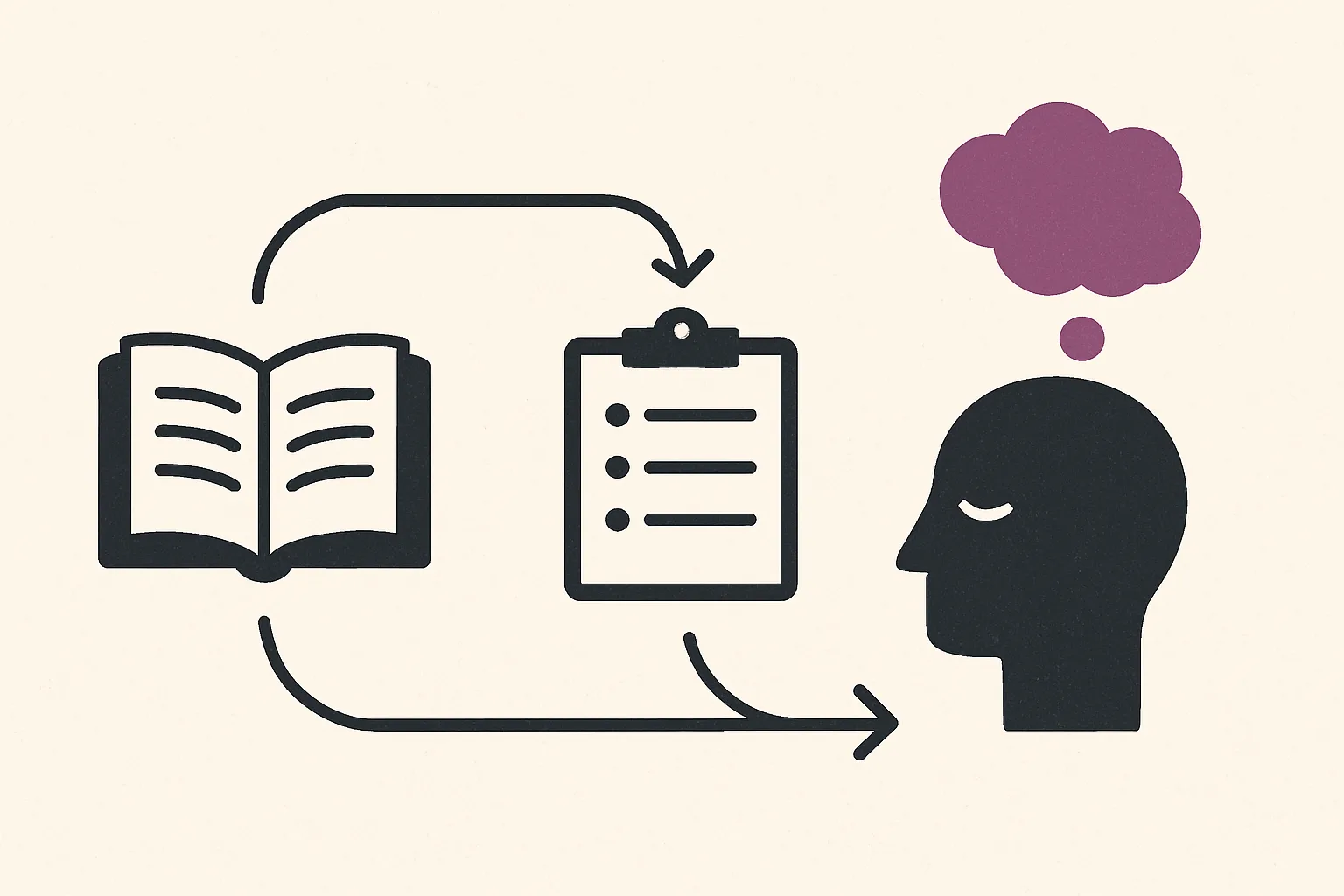
Build a focused glossary for the text. For each new word or phrase, write a concise definition in your own words and note its relevance to the argument. Include a sentence showing how the term is used in context. This creates quick-reference anchors you can revisit during review and future readings.
- Terms and definitions: capture core ideas without parroting the author verbatim.
- Usage notes: note the term’s role in the argument, such as a causal claim or a methodological qualifier.
- Cross-links: connect terms to related concepts or to nearby evidence.
By indexing definitions and references, you reduce rereading time and improve retention. The aim is to know not just what is said, but how the language shapes what counts as proof and what counts as a limitation.
Make the material visible with mapping
Build a concept map linking ideas across sections
A concept map helps you visualize how claims, evidence, and definitions connect. Start with the central idea of the passage and branch out to key terms, supporting data, and counterpoints. Place related concepts near each other to reveal patterns you might miss in linear reading. This externalizes your internal understanding and creates a reference for quick review.
Annotate connections between sources and formats
When you encounter different formats such as graphs, footnotes, or case examples, note how each source strengthens or challenges the argument. Use brief annotations to label why a chart supports a claim or where a quotation offers a counterpoint. This practice makes cross-source relationships explicit and improves transfer to exams or papers.
- Link sections by shared terms or recurring evidence
- Highlight where methodology affects conclusions
- Mark discrepancies between narrative and data presentations
Choose a mapping tool that fits your study habit, whether a paper diagram in the margins or a digital mind map. In practice, a quick sketch of nodes and arrows at the end of a reading block tightens retention and clarifies how ideas interlock across the text.
Strategies for difficult passages
Slow down and reread pivotal sentences
When a sentence carries the main claim or a critical transition, give it extra attention. Read it aloud, chunk by chunk, and pause to confirm you grasp each component. If a sentence bundles multiple ideas, isolate each idea and paraphrase them separately. This approach reduces misreading and helps you maintain focus on key points.
Paraphrase aloud or in writing to test understanding
After a paragraph or two, restate the idea in your own words. Saying it aloud often exposes gaps that a quick read hides. If you struggle, try a one sentence summary and a supporting example. In writing, note the claim, the evidence, and how they connect to your understanding.
Identify and resolve confusions before moving on
Track recurring questions as you read. Note whether confusion stems from vocabulary, logic, or missing background. Seek quick resolution by checking how terms are defined, tracing the argument’s steps, or revisiting a preceding section for context. If a point remains unclear, flag it and return later with targeted questions in mind.
FAQ
Why is it hard to understand difficult texts at first?
Complex arguments, dense terminology, and unfamiliar evidence can overwhelm working memory. Slowing down and chunking the text helps you see how ideas connect.
How can I monitor my comprehension during reading?
Periodically pause and ask yourself what the main idea is, what evidence supports the claim, and where your understanding feels shaky. If gaps appear, reread the relevant passage with a focus on definitions and transitions.
What should I do before reading to set up understanding?
Identify your purpose for the passage, activate related prior knowledge, and preview headings or graphs to prime expectations about the argument.
How does mapping help understanding?
A concept map externalizes connections between claims, evidence and definitions. It clarifies how sections relate and where the author builds or challenges a point.
What if I still feel stuck after rereading?
Paraphrase the sentence in your own words, note which term or idea is unclear, and annotate a plan to resolve it, such as reviewing a definition or revisiting a figure.
If you want to deepen retention, pair these steps with active reading practices and plan reading in chunks aligned to the text structure, not a fixed time frame.
Conclusion
Understanding while reading difficult material comes from a deliberate, structured approach rather than sheer effort. Set a focused purpose, activate prior knowledge, and preview the text to orient your mind toward what matters.
As you read, regularly assess your grasp by chunking the text, paraphrasing, and asking targeted questions. This active engagement helps you stay away from passive reading and trace the thread of arguments, evidence, and definitions.
To make retention stick across formats, translate ideas into a visual map and annotate connections between sources. If confusion arises, pause, reframe the sentence, and resolve the gap before moving on.
Pair these steps with a plan that fits your study style, whether you read on screen or in print, and commit to brief, focused sessions that reflect the text’s structure. This alignment between strategy and material deepens comprehension and keeps what you learn usable.
References
Also read: Ask your library · Compare · Read later