Articles, papers, podcasts, talks

For the things you saved because they mattered.

Omphalis cleans up what you save and explains the hard parts on the page. Notes, questions, and listen stay with the source.

One saved piece, followed all the way through.

Save → Structure → Mark → Learn → Connections → Listen → Ask · 98 sec

Read on the web · iPhone · Android · Chrome · Firefox

Where to start

Start with whatever is already in your backlog.

What happens after you save an article

Here’s one article in Omphalis: Mattering That It’s You by Chelsea Rosenthal.

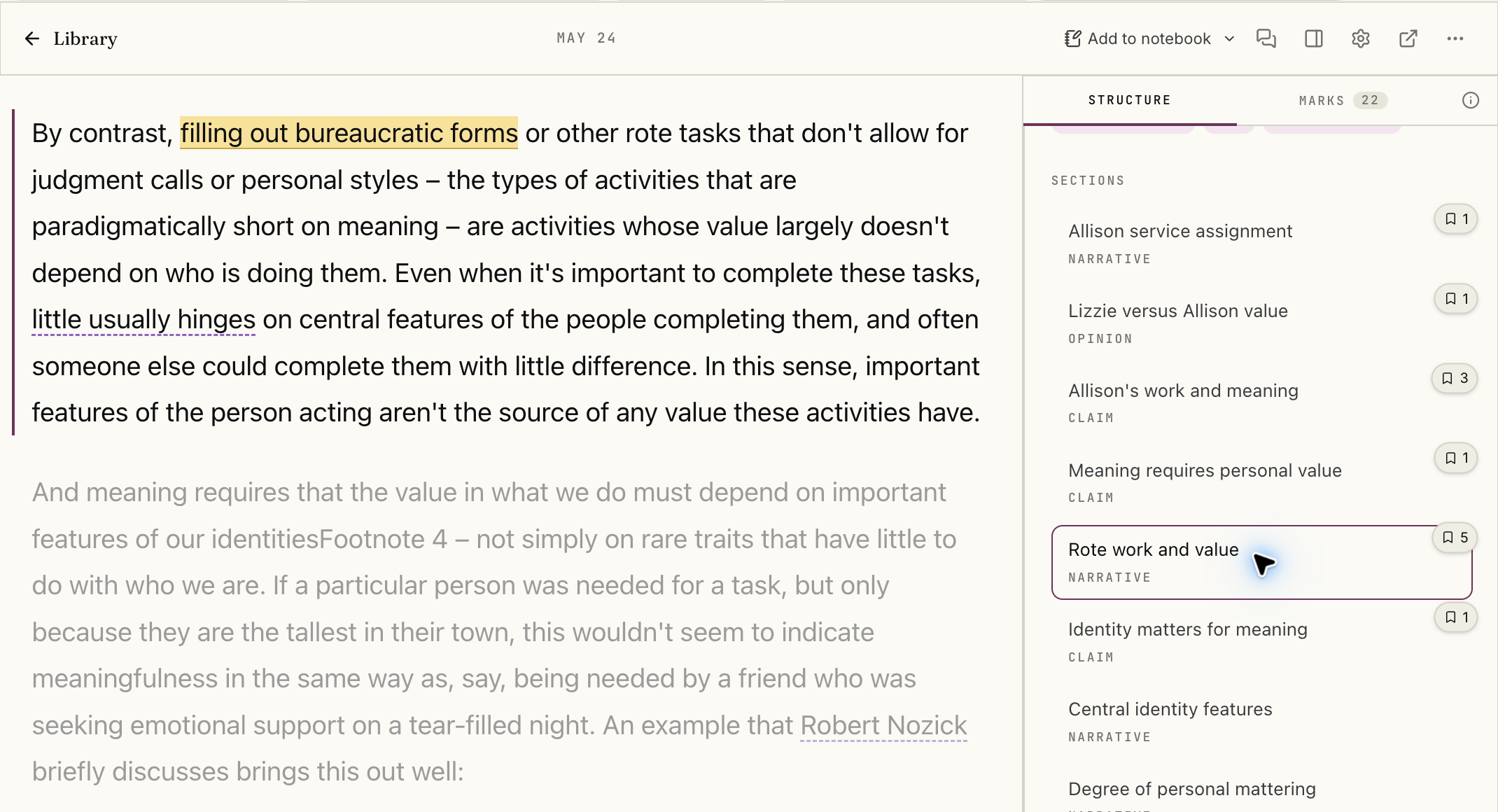
  1. Read the cleaned article

    The article opens in a reading view. Use the section list to find a part you want to spend time on.

    The article’s passage about routine work, with Rote work and value selected in the section list beside it
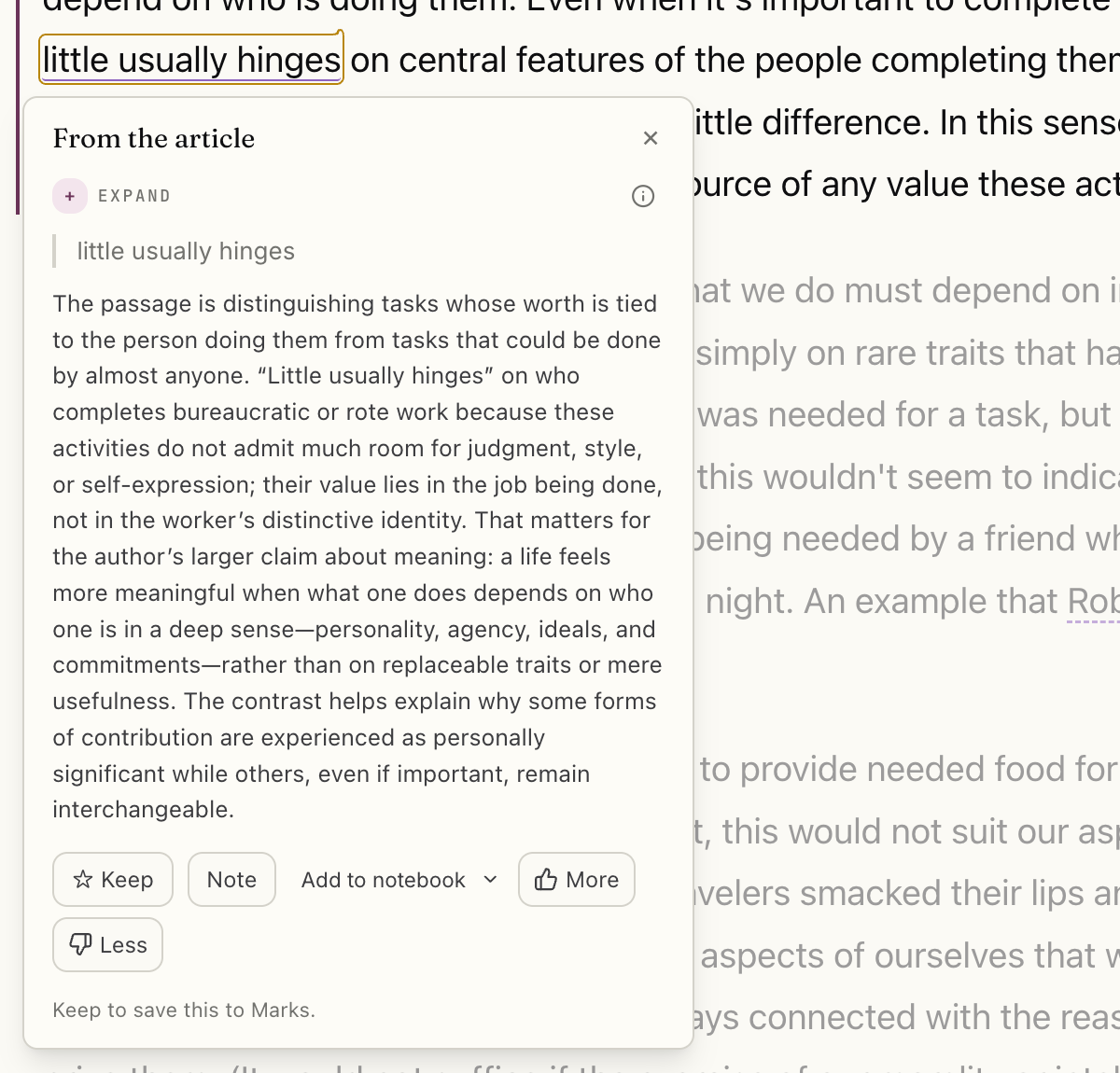
  2. Open an explanation

    Here, an explanation unpacks why routine work can feel less meaningful. The passage stays in view, so you can check the explanation as you read.

    The full explanation of little usually hinges, anchored to the passage, with Keep, Note, and Add to notebook controls
    Select your own phrase with Learn more

    Here, we selected “judgment calls or personal styles” and chose a deeper explanation. It looks at why having room to use your own judgment matters to the author’s argument.

    Learn more starts from a passage you select. Highlight the part you don’t follow and the explanation opens beside it, so you don’t leave the piece to go and look it up.
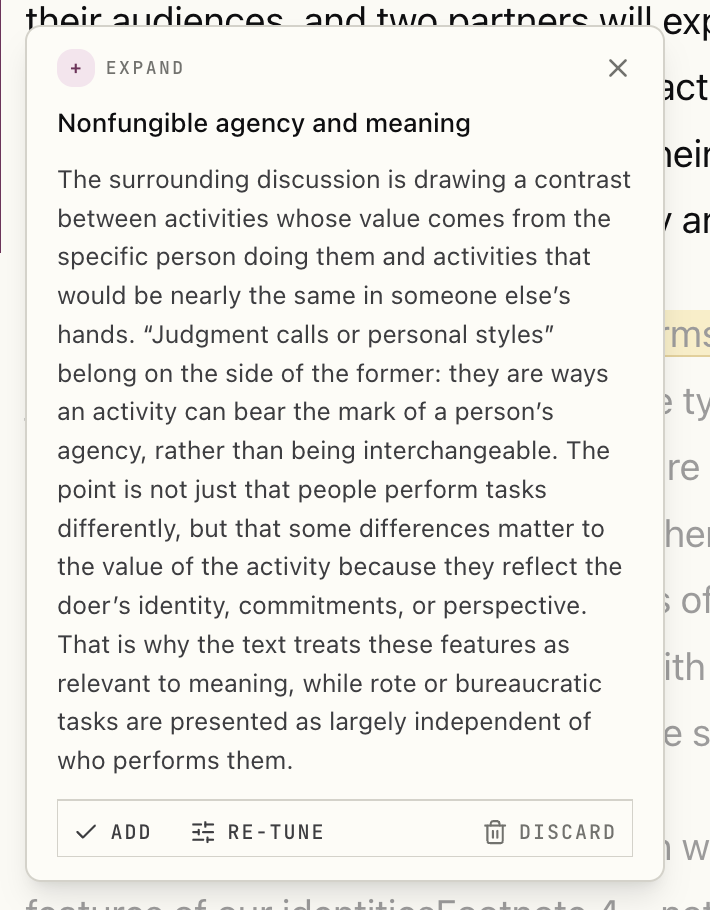
    A deeper explanation of judgment calls or personal styles, with Add, Re-tune, and Discard controls
  3. Keep a note with the passage

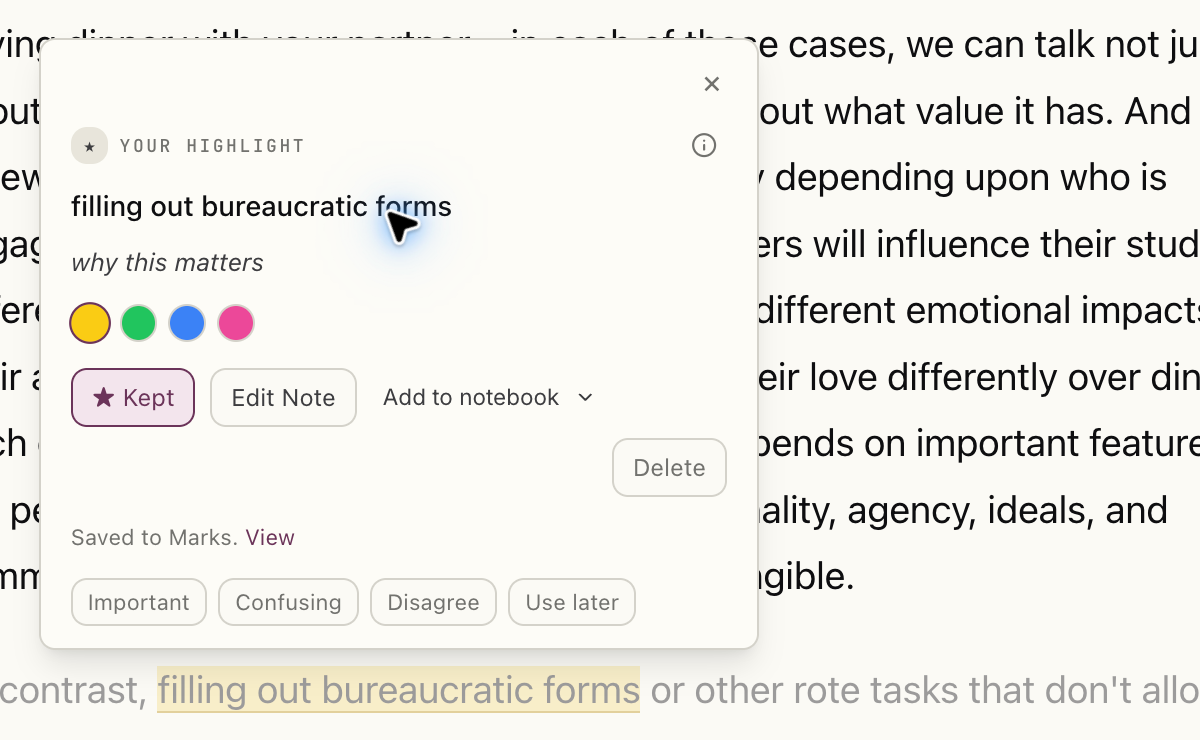
    Keep the passage and write down what caught your attention. Your note stays with the highlight, and you can find it again in Marks.

    The existing demonstration note on filling out bureaucratic forms, with Edit Note, Add to notebook, and Saved to Marks controls

Captured in Omphalis. Select an image to see the detail.

Try the reader →

See it in motion

Short clips from the real app.

Pasting in a link and getting back something you can read.

Go deeper on the same piece

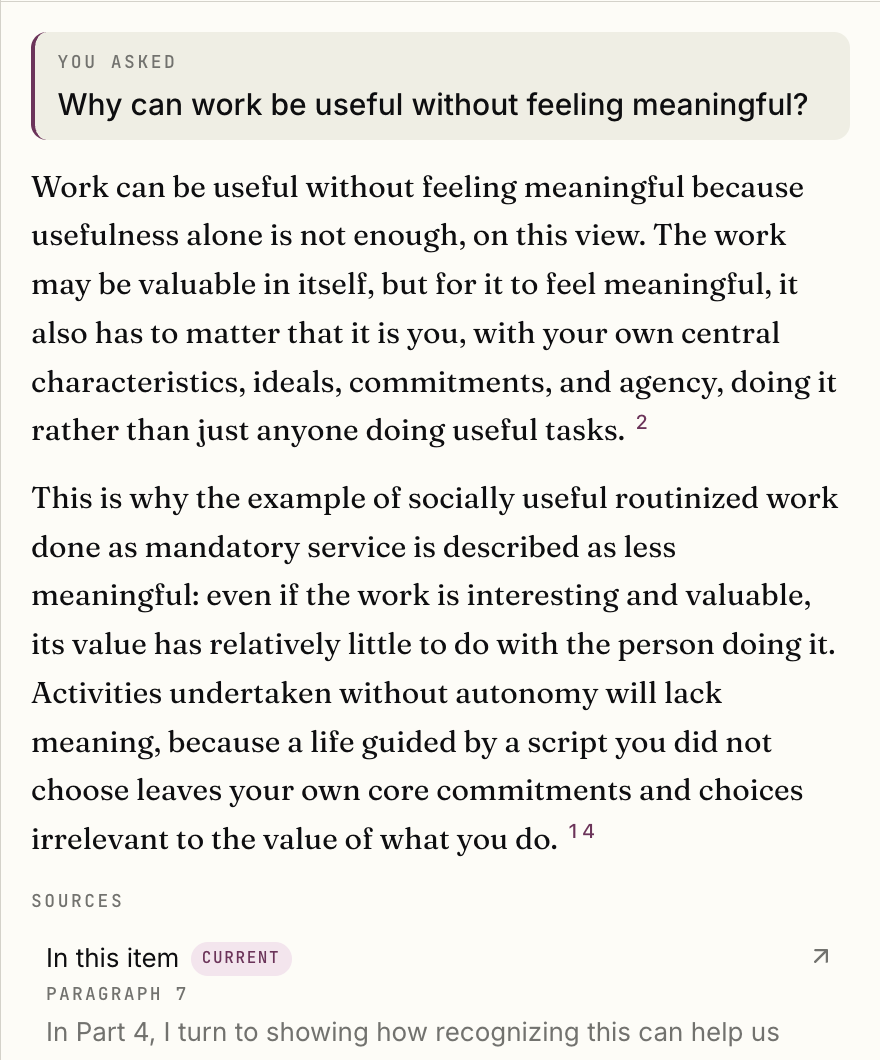
Ask the question you are stuck on

Why can work be useful without feeling meaningful? The answer points at Rosenthal’s paragraphs. Open a citation or ask a follow-up.

Ask starts from a question you type. You choose what it draws on, either just this piece or everything in your library, and the answer links back to the passages it used.

Select the image to see the detail.

The question Why can work be useful without feeling meaningful, its answer with numbered citations, and the beginning of the source passage list
A question about Mattering That It’s You, with citations to the article.

Why build around the source? Read the case for comprehension.

It helps most on the hard ones.

Short and easy things do not need much help. Long and dense ones do.

Articles, PDFs, EPUBs, Word docs, podcasts, YouTube, newsletters and your own voice notes all run through the same pipeline. Subscribe to Substack or any publication with a feed right in your Inbox, alongside your podcasts.

Start with one thing you saved.

Drop in the piece you keep postponing. Give it a few minutes.

The free plan is real and stays free. See pricing

Start free

Founding members get 90 days of full Premium, early access, and direct support (limited spots). After that, Free stays free.

Do I need a credit card?
No. You can create an account and try Omphalis without a credit card.
Is there a free tier?
Free includes a monthly allowance for new sources and listening. Reading what you have saved, your own notes, and exporting stay free.
What happens when the trial ends?
Your account moves to Free, with everything you saved kept, unless you choose a paid plan.

Then take it with you

Download on the App StoreGet it on Google PlayAvailable in the Chrome Web StoreGet the add-on for Firefox