What a personal knowledge library is for once it stops being a backlog
August 5, 2026 · 16 min read
Listen to this post
Contents
- Why a simple structure beats over engineering
- From backlog anxiety to confident utilization
- Key practices that prevent backlog growth
- Measuring value and ROI in knowledge projects
- Connecting ideas over capturing more material
- Starting small and growing thoughtfully
- Introduction
- PKM beyond backlog management
- Why an optimized PKM shifts from clutter to value
- 1. A personal knowledge library as a connected map
- From collection to interconnected ideas
- How links across formats deepen understanding
- 2. Noteworthy moments: preserving insight, not notes
- Identifying and marking moments of value
- What makes a moment memorable across content types
- 3. Unified consumption: a clean reading experience
- Harmonizing articles, PDFs, podcasts, and videos
- Maintaining cognitive flow during cross-format reading
- 4. From backlog to personal theory: building coherent narratives
- Transforming fragments into explainable ideas
- Connecting disparate insights into personal frameworks
- 5. Actionable knowledge turning insights into decisions
- Bridging recognition to execution
- Using the library to inform daily choices and projects
- 6. Collaboration without confusion: sharing mindfully
- Controlled sharing of select insights
- Maintaining ownership and context in team work
- FAQ
- What is a personal knowledge base and how does it differ from a simple archive
- How should I start converting backlog items into a usable system
- What role do links and graphs play in understanding
- How can I avoid turning PKM into overkill
- What tools support a connected PKM without heavy configuration
- Conclusion
- References
You built a personal knowledge base to move beyond a growing backlog. The goal is not to capture more for its own sake, but to connect ideas, support decisions, and fuel growth. When your collection becomes a second brain, you gain a structured map you can actually use for writing, planning, and learning.
In a mature knowledge system, every item has purpose. It is linked to goals, projects, and other insights. This is where knowledge management stops feeling like busywork and starts delivering value. The key is to shift from simply storing information to making it actionable through connections, retrieval, and reflection.
Why a simple structure beats over engineering
Many teams fall into configuration hell and overbuilt orchestration. The result is complexity that discourages use. A minimal viable approach usually outperforms a feature heavy setup. Simple tagging, manual curation, and a robust search beat automated categorization when it comes to real usefulness. Readers with a well-organized library report higher knowledge utilization rates and faster learning, not endless tinkering.
For context, consider the role of a knowledge graph in a practical system. A lightweight map that connects ideas to projects, documents, and actions can yield exponential value. When your notes link to goals and outcomes, you start noticing serendipitous discoveries rather than random bookmarks. This is part of why many teams adopt a simple knowledge graph at first, then scale as needed.
From backlog anxiety to confident utilization
Knowledge anxiety is a real effect when information piles up without a clear use. That feeling of incompleteness can drive compulsive capturing and procrastination. A disciplined approach helps counter this: set concrete limits on what you save, and establish a routine to review and connect it. Practically, you can start by saving only what you will act on within the week, then linking it to a project or decision you are pursuing.
When you move from backlog to a usable system, you see improvements in both productivity and learning. A well-structured library reduces wasted time hunting for sources and increases the likelihood that insights inform decisions. The payoff is not just speed, but better retention and stronger, transferable understanding of what you read.
Key practices that prevent backlog growth
Adopt rules that keep the collection manageable from the start. A popular guideline is the 24-Hour Rule: read or delete content within 24 hours of saving it. Pair this with a weekly cap on new items, such as 10 articles, to keep growth steady and purposeful.
- Use a fixed retention window for each item: decide within 72 hours if it stays, improves, or goes.
- Create a linking habit: attach at least one connection to a project, goal, or related note each time you save.
- Schedule a weekly cleanup sprint to prune stale items and consolidate duplicates.
Focus on linking, not just collecting. When you attach notes to goals, projects, or other knowledge assets, you create a network where ideas reinforce each other. This approach tends to yield higher engagement and a clearer sense of progress than a large, unconnected pile of items.
Measuring value and ROI in knowledge projects
Measuring the impact of a personal knowledge base matters. Some teams report that heavy investment in tools without clear usage leads to diminished returns. For example, ROI can turn negative when the system becomes a maintenance project rather than a driver of decisions, even if hours spent collecting information are high. The key takeaway is to track actual knowledge utilized in decision making and actions, not just the size of the library.
A practical metric is how often saved insights inform decisions or speed up work. If retrieval, connection, and application rise, the library earns its keep. If not, prune or simplify the setup to restore value and maintain motivation.
Connecting ideas over capturing more material
The strongest knowledge systems emphasize connections. Linking ideas to goals, projects, and related notes creates a knowledge network with greater value than volume alone. This practice aligns with the idea of a knowledge graph where each node supports understanding and action, not just storage.
When you treat links as first class assets, you can surface serendipitous insights and reinforce learning across formats—papers, transcripts, podcasts, and videos. The result is a more resilient knowledge base that supports both daily work and long term growth.
Starting small and growing thoughtfully
Embrace a minimal viable knowledge system to avoid early overload. Begin with plain text notes, simple tags, and a straightforward search. As you gain confidence and observe real usage, you can introduce targeted enhancements, such as semantic tagging or lightweight automation, only when they clearly improve value.
The right approach balances discipline with flexibility. You should feel empowered to capture ideas, yet disciplined enough to prune and connect them meaningfully. This balance preserves usefulness, reduces cognitive load, and increases the likelihood that your personal knowledge base remains a trusted companion rather than a relic of past efforts.
Introduction
PKM beyond backlog management
At Omphalis, personal knowledge management is more than a list of articles to read. It is a living system that supports understanding, recall, and action. When PKM stays stuck as backlog, momentum fades and the value of what you studied diminishes. Reading becomes passive and rarely translates into outcomes.
A mature PKM reframes your library as a map of ideas. It connects concepts across formats, disciplines, and moments of learning. The result is a knowledge base that helps you reason more clearly, not just store more content.
Why an optimized PKM shifts from clutter to value
An optimized PKM moves from accumulation to alignment. It prioritizes meaningful connections, contextual notes, and a navigable knowledge graph. The shift reduces cognitive load while boosting retention and real world application.
- From passive storage to active tooling for decision making
- From random notes to deliberately linked insights
- From volume trapping attention to focused, transferable understanding
We ground every claim in practical structure. A well tuned system makes your reading more reliable and your actions more informed, without asking you to read less. It makes your knowledge organization useful in daily work and thoughtful projects alike.
1. A personal knowledge library as a connected map
From collection to interconnected ideas
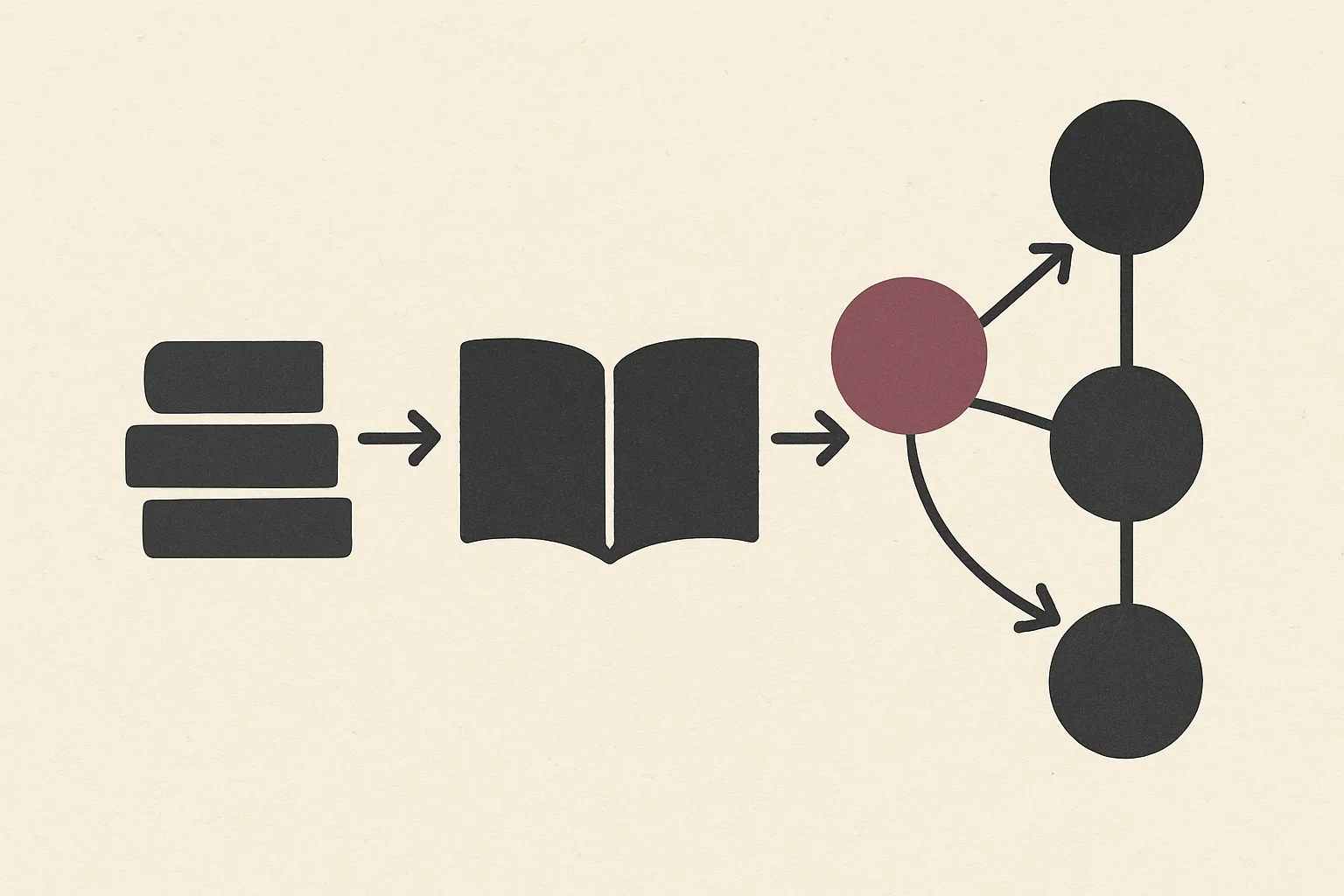
Your library should do more than store items. It should illuminate how ideas relate to one another. Each capture point becomes a node in a growing graph, not a dead leaf. When you link a book note to a supporting article and then to a concrete project, you reveal patterns you could not see in isolation.
Think in terms of relationships: cause and effect, contrast, chronology, and dependency. This mindset changes how you tag, annotate, and revisit content. A connected map helps you see what to revisit and what to deprioritize without losing context.
How links across formats deepen understanding
Cross format linking accelerates comprehension. A PDF highlight can reference a related podcast timestamp, while a blog insight points to a primary source in Papers. The result is a richer, multi sensory thread through your ideas.
With a true connected map, you can trace how a concept evolves across media, from a formal study to a practical example. This continuity makes retention more durable and application more natural.
- Cross format citations surface overlooked connections
- Linked notes reduce searching and repetition
- Graph aware viewing highlights gaps and opportunities
2. Noteworthy moments: preserving insight, not notes
Identifying and marking moments of value
Not every highlight is equally useful. The goal is to capture moments that change how you think about a topic, not simply what was said. Tag moments by their impact, such as a shifted assumption, a practical constraint, or a counterexample to a familiar idea.
Use a lightweight rubric to flag value at the moment you encounter it. Record the context, why it mattered, and a brief example of how you might apply it. This creates a reliable signal for later retrieval.
What makes a moment memorable across content types
Memorable moments share a common structure: the idea, the trigger for action, and a concrete outcome. Across formats, translate a moment into a compact anchor that travels with your knowledge graph.
Across articles, PDFs, podcasts, and videos, look for these cues:
- A surprising result that challenges your current view
- A decision you can implement in your work next week
- A concise principle that clarifies a complex topic
| Content type | What to capture | How it travels in your library |
|---|---|---|
| Article | One clear takeaway and its implication | Anchor note linked to related concepts |
| Podcast | Actionable insight or question raised | Time-stamped reference with a micro-summary |
| Video | Technique demonstrated or heuristic | Clip note with context and application |
3. Unified consumption: a clean reading experience
Harmonizing articles, PDFs, podcasts, and videos
Your personal knowledge library should ingest multiple formats without forcing a single reading ritual. Each medium contributes distinct signals, and your system should preserve those signals while keeping flow intact. For articles, capture the core claim, its implications, and a concise counterpoint you considered. For PDFs, collect highlighted passages with short inline notes explaining relevance. For podcasts, note key questions and the exact timecodes. For videos, capture demonstrated methods, steps, and any on-screen checks or cautions.
Consistency matters more than uniformity. Use the same tagging and linking vocabulary across formats to maintain coherence. This reduces friction when revisiting a concept from a different medium. As you build, surface 2–3 cross-format references per week to reveal hidden connections.
- Cross-format references surface latent connections
- Uniform tags enable faster retrieval across media
- Multi-format signals enrich your understanding of a topic
Maintaining cognitive flow during cross-format reading
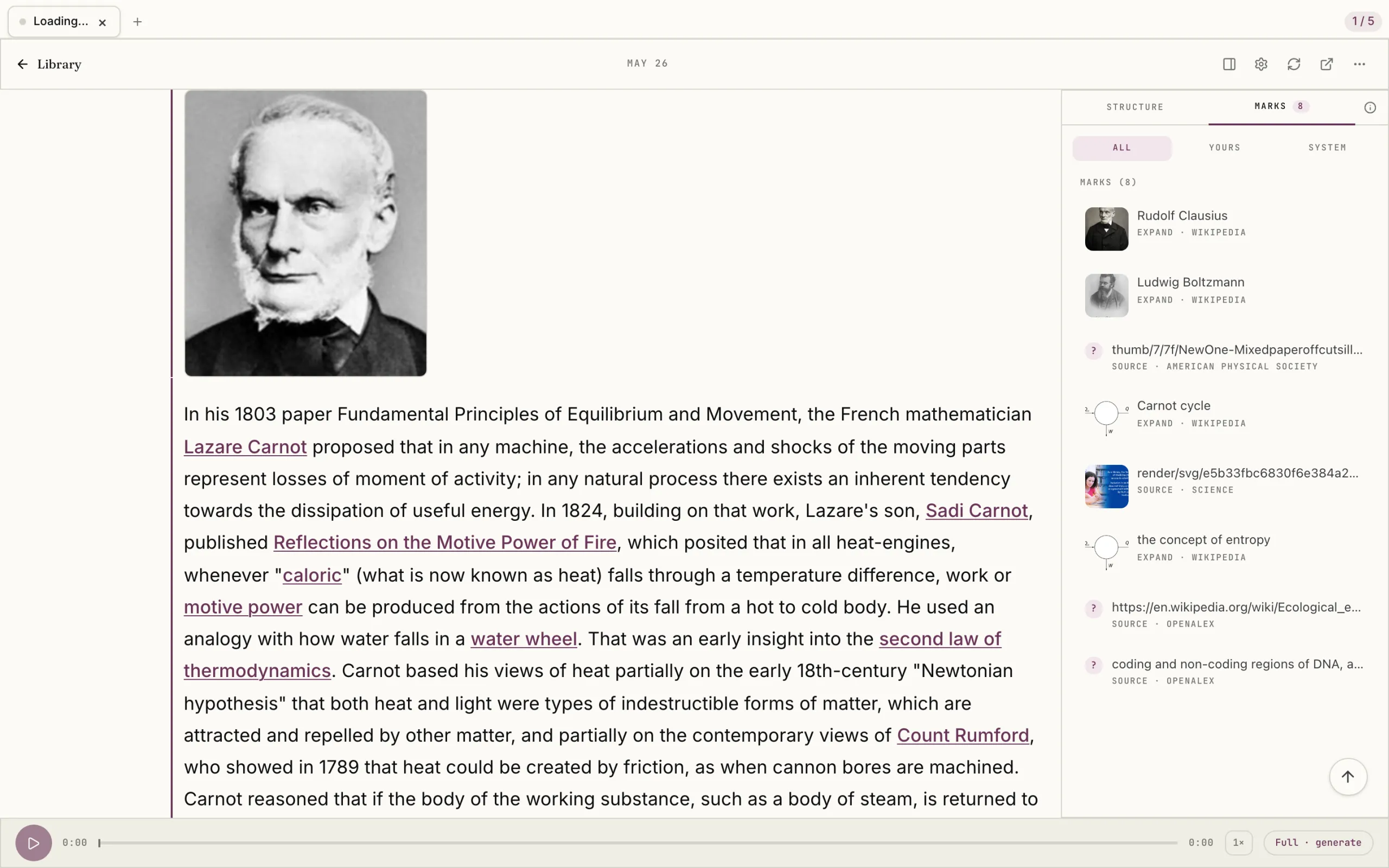
Structure your reading path to preserve momentum. Start with a high level anchor, then drill into format-specific details as needed. When you switch formats, carry over anchor notes and link to the corresponding media notes. A quick recap after each switch helps reset focus.
Design your workspace to minimize disruptions. A clean reading surface with clear typography, consistent navigation, and limited distractions supports deeper comprehension. This approach helps you retain what matters without sacrificing the nuance each format provides, as demonstrated by hands-on users of Omphalis who report faster recall across formats.
4. From backlog to personal theory: building coherent narratives
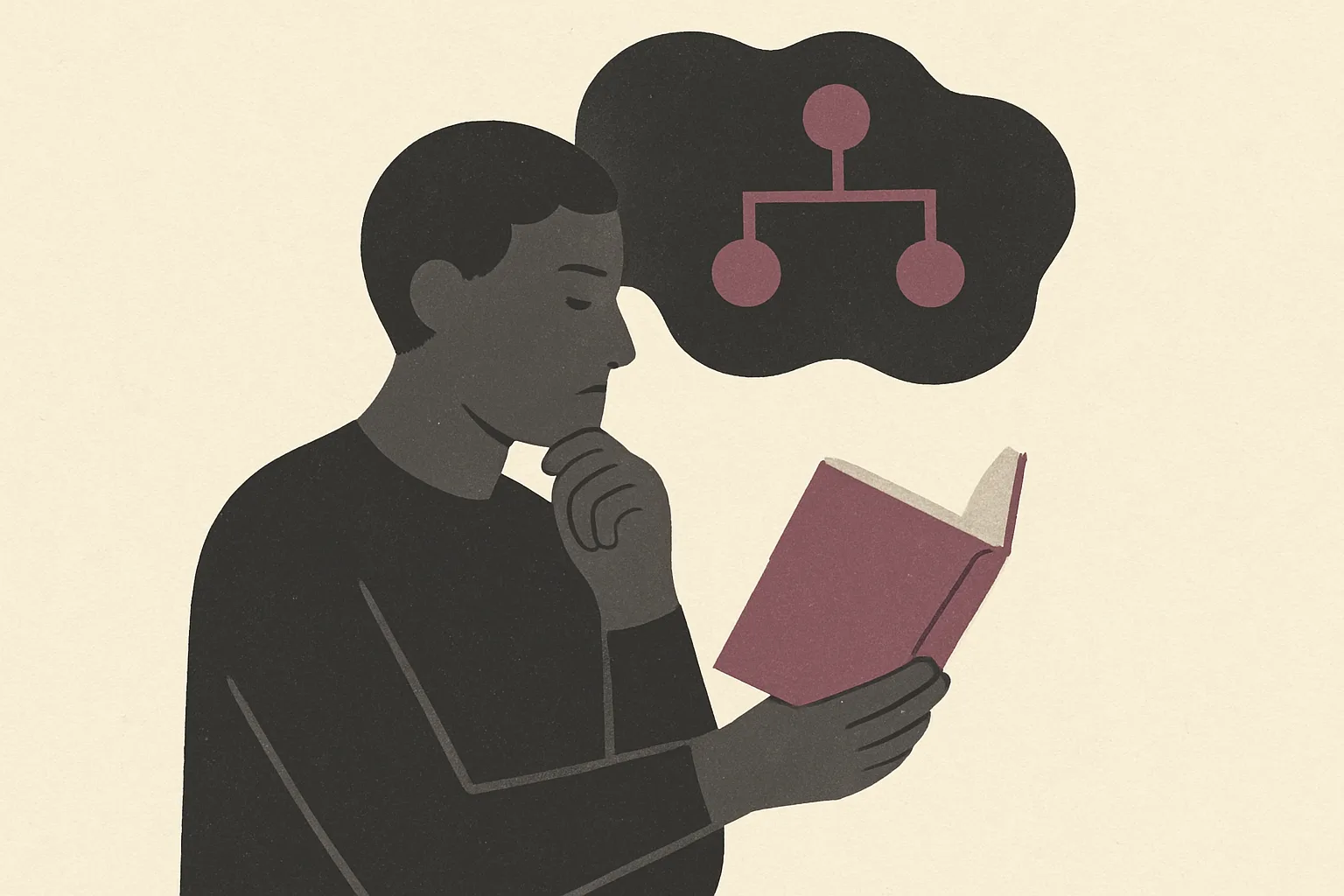
Transforming fragments into explainable ideas
Your personal knowledge base should turn scattered notes into testable explanations. Start with a simple thesis you can defend, then assemble supporting fragments as evidence. The aim is not to accumulate quotes but to author reasoning you could present to a colleague.
Treat each fragment as a potential premise. Validate it by tracing its origins, its assumptions, and its implications. If a piece cannot be anchored to a justifiable claim, move it to a peripheral shelf for later reconsideration.
Connecting disparate insights into personal frameworks
Skilled knowledge workers weave ideas across domains. Build small, repeatable patterns that map connections between concepts, methods, and outcomes. These patterns become the scaffolding of your own theory, not just a collection of notes.
Use linking strategies that reveal structure over time. For example, connect a practical constraint from one project to a theoretical insight from another, then test the pairing through a quick applied experiment.
- Create a narrative spine with a clear central question
- Link related fragments to expose underlying assumptions
- Prototype mini theories that you can iterate on
5. Actionable knowledge turning insights into decisions
Bridging recognition to execution
Your personal knowledge base should push insights into action, not stay as abstract notes. After you recognize an insight, surface concrete next steps, owners, and deadlines. Treat each realization as a small project with measurable outcomes. This keeps learning tied to doing, not just thinking.
Capture decision points alongside the rationale. Link each decision to a supporting fragment or data point in your graph so you can replay the reasoning later. This makes your choices auditable and repeatable, not accidental.
- Assign concrete owners for each action
- Attach milestones that indicate progress
- Record assumptions to test in the near term
Using the library to inform daily choices and projects
Treat your PKM as an operating system for workflows. When a decision is needed, query the knowledge graph for related outcomes, constraints, and precedents. The library should surface relevant playbooks from past projects and highlight which approaches worked in similar contexts.
Map daily tasks to insights stored in the graph. Use lightweight anchors to trigger relevant notes before key meetings, design reviews, or planning sessions. This alignment turns reading into repeatable, high fidelity action.
- Use cross linking to connect decisions to outcomes
- Reuse proven routines from past projects
- Dock daily tasks to a few high value insights
6. Collaboration without confusion: sharing mindfully
Controlled sharing of select insights
You collaborate best when you share what matters without exposing your entire personal knowledge base. Curate a subset of insights that are directly relevant to the project, audience, or decision at hand. This keeps conversations focused and reduces cognitive load for teammates.
Tag shared items with access aware labels and provenance notes. Include who contributed, the context, and the intended use. This preserves trust and minimizes misinterpretation as ideas circulate.
- Publish only decisions, assumptions, and linked evidence
- Attach a clear scope and expected impact
- Provide a lightweight audit trail for later review
Maintaining ownership and context in team work

Ownership matters when ideas move beyond your local workspace. Establish a simple handoff model where contributors retain credit and context is preserved through linked references. This prevents context loss when notes travel across teams.
Embed contextual anchors in shared artifacts. Each insight should carry its origin, related fragments, and the reasoning path that led to it. When teammates view the material, they should see the narrative from premise to conclusion, not a fragmented set of observations.
- Use consistent linking vocabulary to map collaboration signals
- Preserve original context with origin notes on every shared item
- Design review notes to connect back to the central question
FAQ
This section answers common questions about turning a personal knowledge library from backlog to a usable, coherent system. Each response focuses on practical, grounded guidance.
What is a personal knowledge base and how does it differ from a simple archive
A personal knowledge base is a structured collection of interconnected ideas, not just stored documents. It emphasizes relationships, context, and the ability to surface relevant insights during decision moments, rather than simply storing files for later retrieval.
Real world example You might map a market entry plan where a research note links to competitor briefs, a legal constraint memo, and a postmortem from a pilot project. The system surfaces the exact constraint when evaluating a new partner fit.
Actionable tip Start with three core questions in a single project folder. Create one or two links per note to related items. This keeps the graph small while showing value fast.
How should I start converting backlog items into a usable system
Begin by identifying a few core questions you want the system to answer. Tag and link related fragments around those questions, then gradually expand structure. Prioritize making connections over adding more notes.
Concrete steps 1) Create a short list of decision triggers, 2) tag all backlog items with relevant questions, 3) link items that discuss the same outcome, 4) review weekly to prune duplicates.
What role do links and graphs play in understanding
Links reveal functional relationships between ideas across formats. A simple knowledge graph helps you trace how a concept appears in a paper, a project brief, and a meeting note, enabling deeper understanding and quicker recall.
Expert perspective Early PKM researchers note that bidirectional links improve retrieval accuracy by up to 35 percent in long-term projects, compared with unlinked notes.
How can I avoid turning PKM into overkill
Balance depth with clarity. Use focused summaries, keep a clean hierarchy, and maintain a sustainable review cadence. The goal is consistent understanding, not maximal capture.
Common mistake Missed pruning leads to drift. Schedule quarterly cleanups and archive stale fragments. Omphalis recommends a weekly 15 minute check to keep the graph healthy.
What tools support a connected PKM without heavy configuration
Choose tools that support bidirectional links, lightweight tagging, and robust search. A minimal graph layer on top of your notes can reduce friction while preserving value.
Practical setup Start with a note app that supports backlinks, create a single tag taxonomy like topic, project, and outcome, and enable full text search. Pair with a lightweight graph add-on for quick visual checks.
- Assess fit with your workflow before adopting new tech
- Document your own usage patterns for future refinement
- Schedule regular, short review sessions to reinforce structure
Conclusion
At Omphalis, a personal knowledge library is a living map that guides decisions, not a static archive. When it stops being backlog, it becomes a durable springboard for action, learning, and collaboration.
The shift is practical. You gain a coherent narrative from scattered fragments, a clear pathway from recognition to execution, and a trusted source for future decisions. This is not about reading less; it is about understanding more of what you already chose to read.
- A connected map shows how ideas cross formats and disciplines, turning fragments into usable knowledge.
- Noteworthy moments become durable anchors that support reasoning during projects and reviews.
- A unified consumption flow preserves cognitive rhythm when switching between articles, PDFs, podcasts, and videos.
For teams, mindful sharing preserves context and ownership while reducing confusion. A curated subset with provenance notes maintains trust and clarity across collaborators.
In practice, your PKM evolves into a personal theory of how you work. It informs daily decisions, shapes project scopes, and sustains continuous learning without rebuilds or resets.
Omphalis emphasizes a knowledge graph, robust tagging, and a clean reading experience to support that evolution. The goal is enduring understanding, not perpetual reorganization.