The Literature Review That Used to Take a Weekend
Updated · 10 min read
Listen to this post
Contents
- 9:00, Make the question smaller
- 9:20, Turn the folder into a reading path
- 10:15, Compare claims, not summaries
- 11:00, Make the comparison visible
- A note on time
- 12:00, Write from the differences
- 1:00, Keep what you noticed
- 1:30, Audit before you call it a review
- FAQ
- Can you write a literature review from 30 PDFs in one day?
- Is a one-day literature review the same as a systematic review?
- Does AI make literature reviews faster?
- What should you check before sharing a literature review draft?
- From accumulation to return
Sort the papers. See their arguments. Keep what you learned.
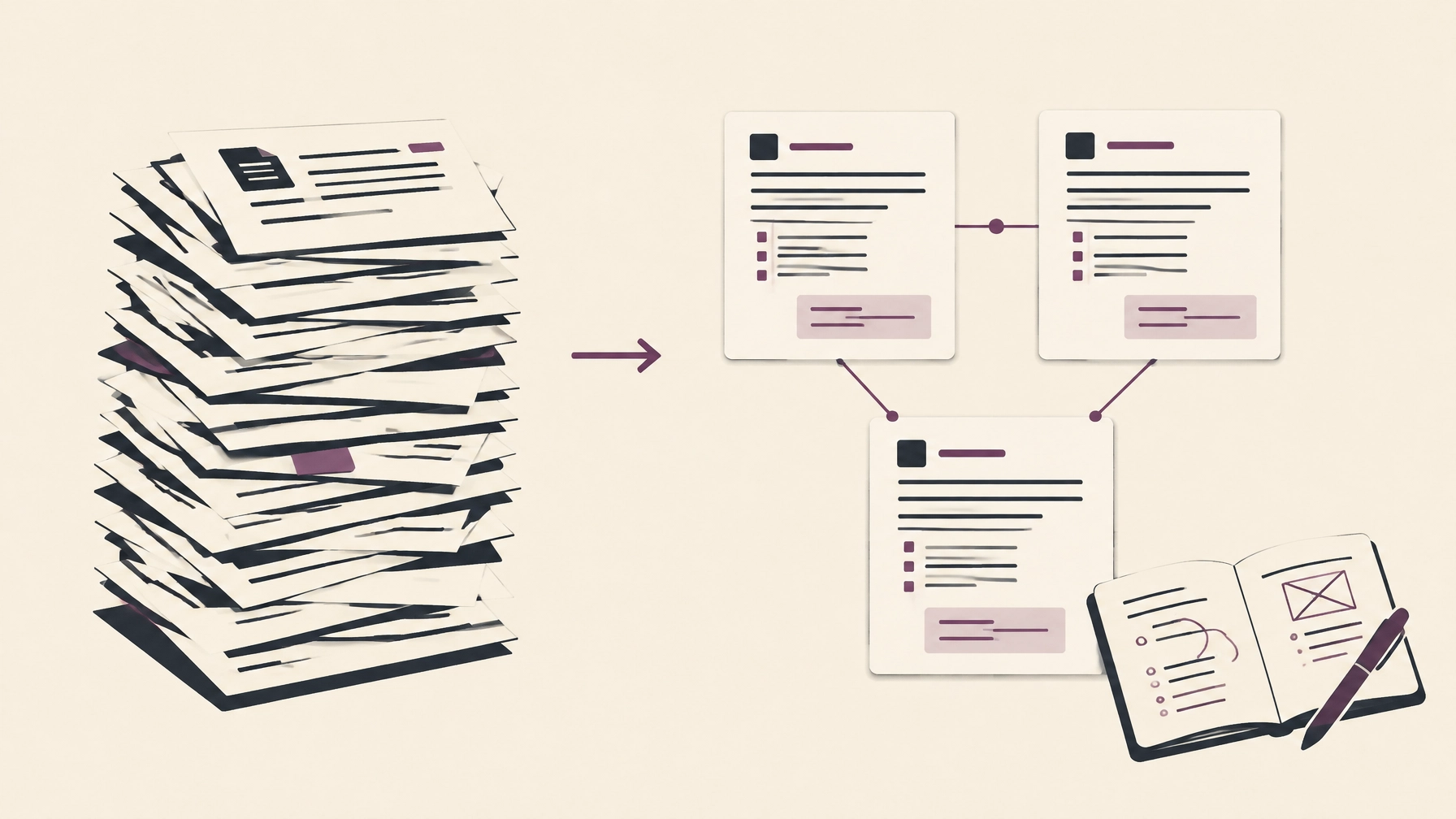
Imagine a researcher, let’s call her Maya, opening a folder of 30 PDFs on a Monday morning. Some are central to her question. Some are only adjacent. A few appear to disagree, though she can’t yet remember exactly how.
By the end of the day, she wants a working literature review: not a definitive account of every paper in the field, but a clear draft she can check, revise, and build on.
This is an illustrative workflow, not a timed trial or a promise of a finished review in a set number of hours. The time ranges below are planning estimates. The real work depends on the papers, the question, and how much verification the draft needs.
The difficulty is not only finding the papers. It is holding each paper’s argument in mind long enough to compare it with the next.
9:00, Make the question smaller
Maya does not begin by asking an AI tool to review the entire folder. She begins by writing down the question the review needs to answer.
That question sets boundaries: what counts as relevant, which populations or methods matter, and what kind of evidence could support an answer. If the boundaries are unclear, a tidy summary can make an unfocused review look more settled than it is.
She spends roughly 20 minutes writing a working question and a short set of inclusion criteria. These can change as she reads, but making them visible gives her a basis for explaining why a paper belongs, or doesn’t.
She also names the task honestly. A focused narrative review of a defined set of papers is not the same as a systematic review. The Cochrane Handbook describes a systematic review as collating the evidence that fits pre-specified eligibility criteria, using a “highly structured, transparent and reproducible methodology.” A single work session cannot replace those steps.
The goal is not to make the question easy. It is to make the work answerable.
9:20, Turn the folder into a reading path
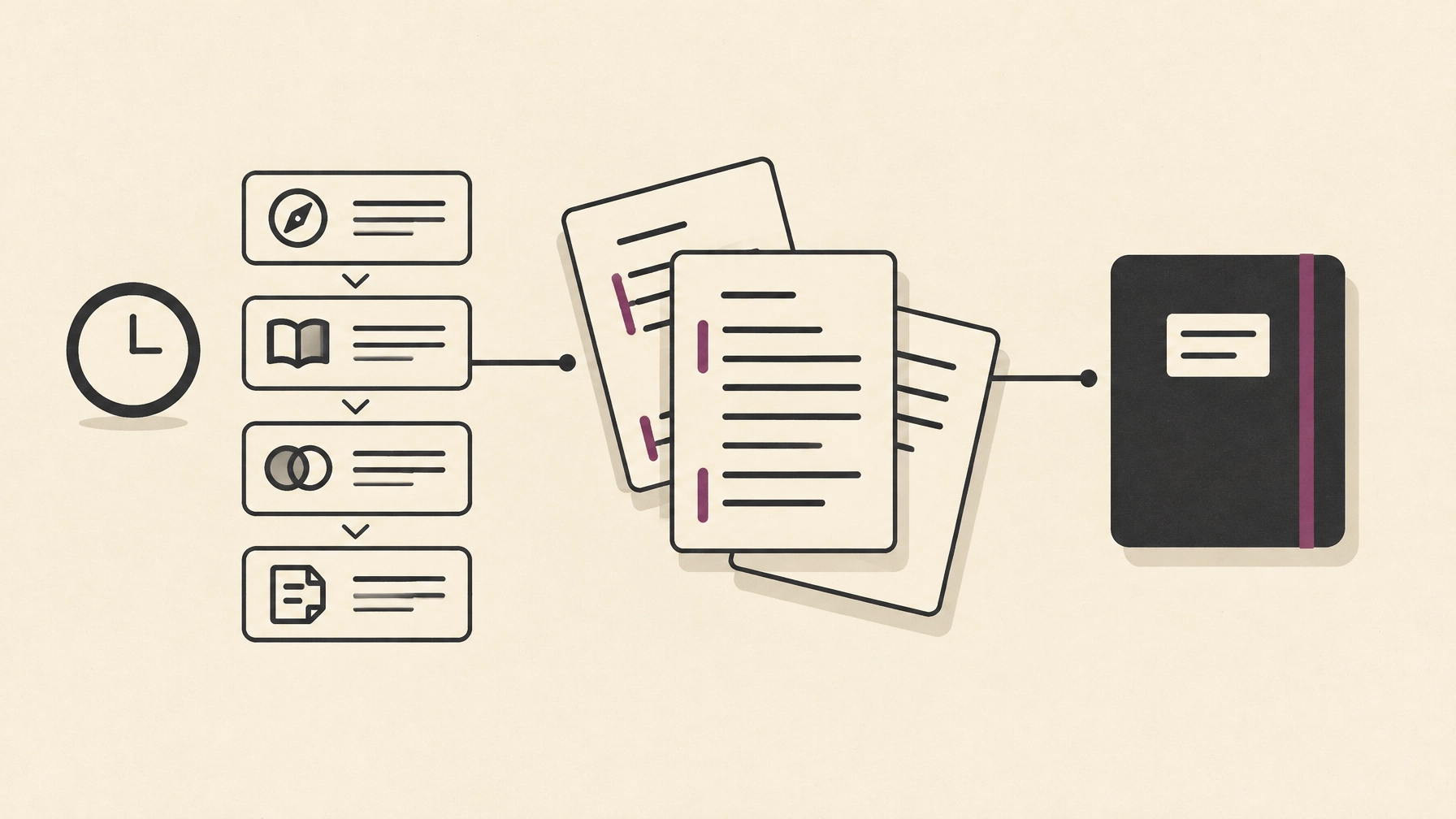
The folder is still messy. Before close reading, Maya checks titles, abstracts, publication details, and the parts of each PDF that indicate its scope and method. This is a first pass, not a verdict.
A useful research workflow tool should help her orient herself in each paper: where it introduces its question, how it develops its argument, where the evidence appears, and where the authors set limits. A map of a paper’s structure is different from a compressed summary. The map helps her find the turns and the passages to check; the paper remains the source.
She can sort her notes into a small, consistent set of fields:
- Research question and context
- Method and evidence
- Main claim
- Important qualification or limitation
- A passage to revisit
This makes papers easier to compare without pretending they are interchangeable. A qualitative study and a controlled experiment may speak to the same question, but they do not support the same kinds of conclusions.
For a practical example of reading one paper with its structure in view, see Omphalis’s research papers reader and guide to reading a PDF without losing the plot.
10:15, Compare claims, not summaries
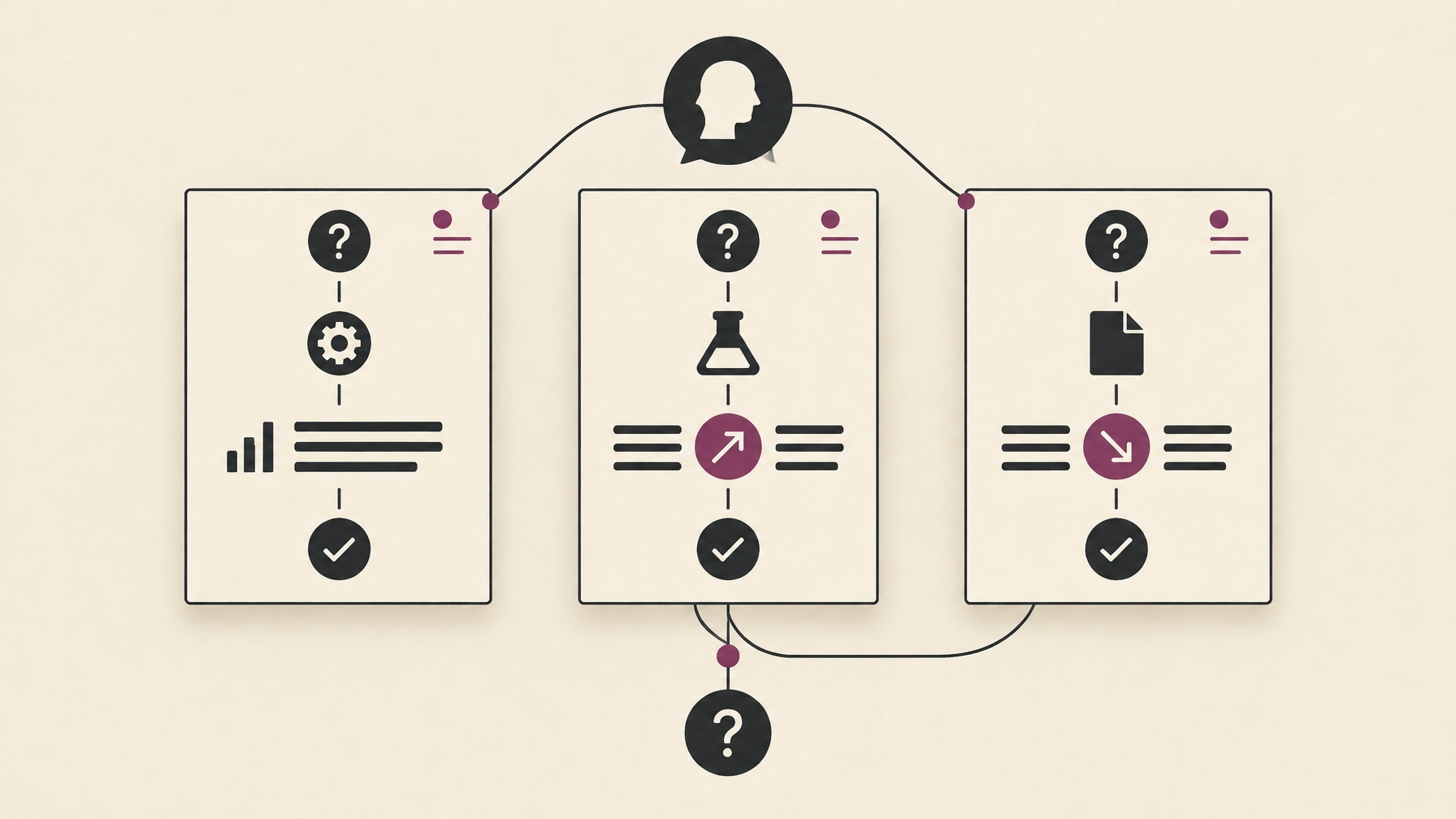
Now the important question changes. Not “What is each paper about?” but “What do these papers say about the same point, and why do their answers differ?”
Maya lays out claims beside claims. For each one, she records what the paper argues, what evidence it uses, and what conditions narrow the conclusion. When two papers seem to conflict, she checks whether they studied different populations, defined a concept differently, used different measures, or asked questions at different scales.
That comparison is where a per-paper argument map becomes useful. The map keeps each source’s reasoning visible while Maya considers its relationship to the others. A connection is a prompt to investigate, not proof that two findings contradict one another.
This is the central task of a research paper analysis AI workflow: help make the papers easier to inspect and compare, while leaving the interpretation with the researcher. A system can surface a possible relationship or organize the notes. Maya still has to ask whether the connection holds in the original papers.
For instance, one study may report an association, while another tests an intervention. A quick summary might place their findings next to each other. A careful comparison asks whether they can answer the same question at all.
11:00, Make the comparison visible
Maya has spent time checking the papers, not just asking for their conclusions. She creates a simple comparison table: claim, evidence, context, limitation, and any counterclaim.
A row might show that two papers reach similar conclusions but use different measures. Another might show that a paper supports a claim only under particular conditions. A third might record an unresolved question rather than force a neat agreement.
The table does not settle the review. It makes the next judgment clearer.
Cross-source work can help here. In Omphalis, a researcher can bring sources into a notebook, ask a question across them, and follow citations back to the source material using Across sources. That can help organize a comparison. It does not certify that the comparison is complete or that the cited evidence has been interpreted correctly.
A note on time
AI assistance can reduce some kinds of review work, but the evidence does not support a universal “one sitting” claim. In a UK comparative case study, one AI-assisted evidence review took 90.5 hours, compared with 117.75 hours for a human-only review. The authors wrote: “The AI-assisted output was ultimately completed in 23% less time.”
That study involved two researchers producing separate reviews on a specific topic. It was not a test of 30 PDFs in one sitting, and the authors cautioned that its results were not generalisable. The AI-assisted process also required more time for revisions: 27 hours, compared with 18.25 hours for the human-only review.
The useful lesson is narrower than a time-saving promise. Assistance may make some stages quicker. Verification and revision still take work.
12:00, Write from the differences
A review built only from individual summaries can sound like a sequence of paper descriptions: first one source, then another, then another. Maya wants the draft to show what the sources collectively suggest.
She starts with the comparison, not with a paragraph about each paper. Where do findings converge? Where do they diverge? What could explain that divergence? Which claims have strong support, and which remain tentative?
A possible outline might have three parts:
- Where the evidence converges. Several papers support a shared observation.
- Where it differs. Findings change across methods, populations, definitions, or contexts.
- What remains open. The current literature does not yet settle a question.
Maya drafts cautiously. She attaches claims to sources, keeps qualifications near the claims they limit, and uses language that matches the evidence. If the studies suggest a relationship, she does not quietly turn it into a cause. If a conclusion depends on one context, she says so.
The draft is a working argument, not a substitute for the papers. When a paragraph feels too smooth, that is a useful reason to return to the source.
1:00, Keep what you noticed
A literature review often continues long after the first draft. Maya will need to explain why a paper mattered, return to a methodological detail, or check whether a new source changes her interpretation.
So she keeps a small record of her own decisions: the passage she marked, why it mattered, and how it relates to another paper. She records open questions, too. A note that says “supports the claim” is less useful than one that says, “supports this claim for this sample; check whether the measure matches the other study.”
Those marks are different from generic summaries. They preserve what Maya noticed, questioned, and chose to keep. A reading companion can help organize them and make related material easier to revisit, but her notes remain the record of her judgment.
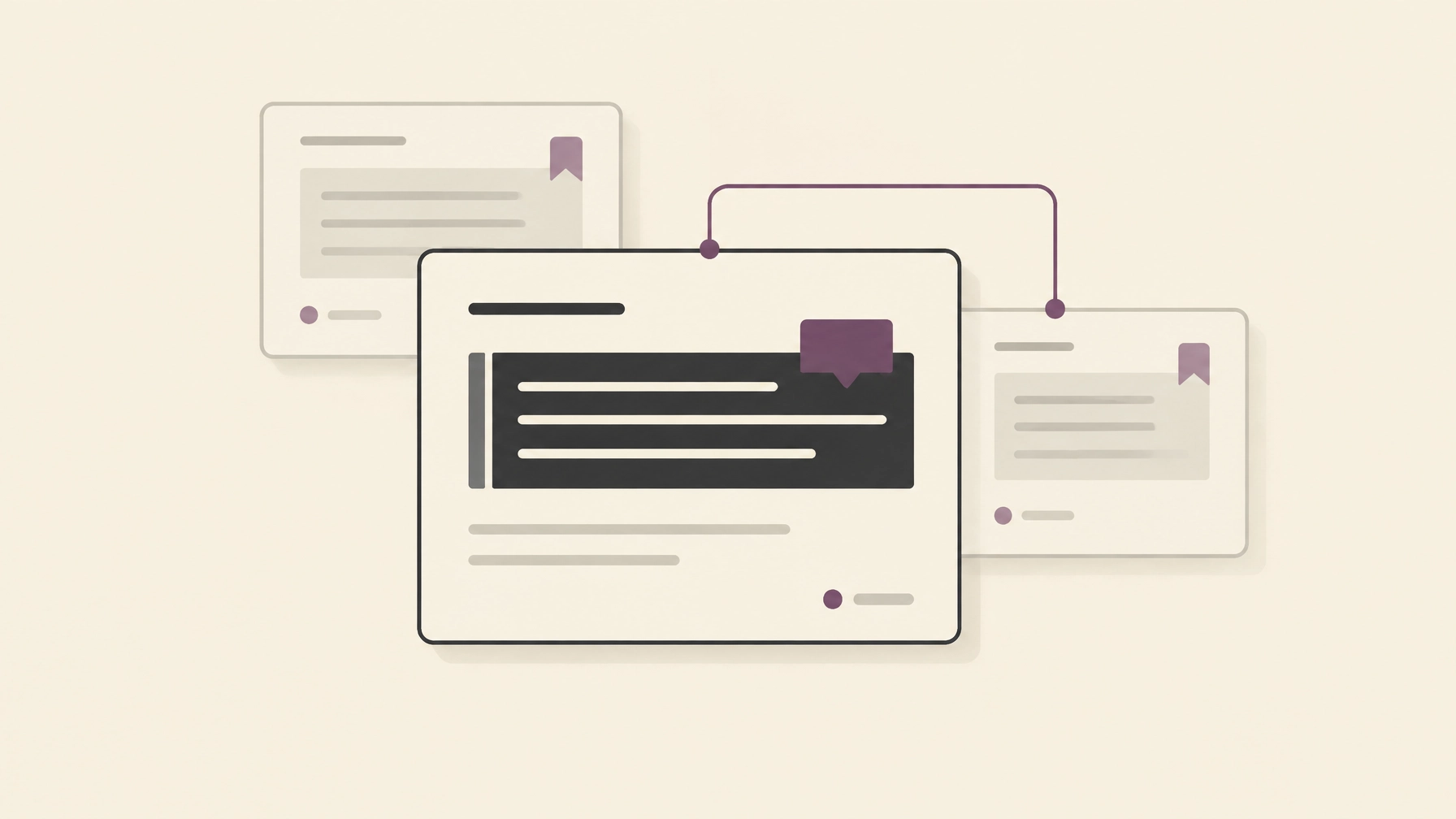
That matters when the review changes. A new paper may complicate a claim she thought was settled. If her earlier note is attached to the source passage, she has a way back, not just a sentence copied into a draft with its context missing.
1:30, Audit before you call it a review
Before sharing the draft, Maya checks every citation against the original paper. She verifies quoted wording, numbers, methods, and the boundaries of each claim. She looks again at papers that challenge her emerging interpretation.
This step is not administrative cleanup. It is part of the reasoning. The papers may have been extracted, mapped, grouped, and compared, but the researcher remains accountable for what the review says they show.
A deliberate sitting can leave useful things behind:
- A scope and criteria she can explain
- A structural map for each paper she intends to use
- A comparison of claims, evidence, and limitations
- A working draft organized around relationships between sources
- Marked passages and questions she can return to
It may also leave gaps. The search may need extending. A method may need closer review. A claim may remain unsettled. A credible workflow makes those limits visible rather than smoothing them away.
In short: narrow the question, map each paper’s argument, compare claims rather than summaries, write from the differences, and check every citation against the source before you share the draft.
FAQ
Can you write a literature review from 30 PDFs in one day?
You can produce a working draft: a scope, a map of each paper, a comparison of claims, and an outline built on where the sources agree and differ. A finished review usually needs more reading, a wider search, and a careful citation check.
Is a one-day literature review the same as a systematic review?
No. A systematic review depends on pre-specified eligibility criteria and a documented, reproducible search and screening process. A focused narrative review of a set folder of papers is a different and smaller task, and it should say so.
Does AI make literature reviews faster?
Sometimes, for some stages. In the UK comparative case study above, the AI-assisted review took less time overall but more time in revision, and the authors said the results were not generalisable.
What should you check before sharing a literature review draft?
Check every citation against the original paper: quoted wording, numbers, methods, and the limits of each claim. Then reread the papers that challenge your interpretation.
From accumulation to return
Thirty PDFs are not yet a literature review. They are a collection of sources. The review begins when their arguments become visible beside one another, and when the researcher can say what the evidence supports, where it differs, and what remains uncertain.
An AI research tool can help make that work easier to enter. It can organize a paper’s structure, keep a comparison in view, and preserve a researcher’s notes beside the source material. It should not decide what the field means or replace the judgment required to write about it.
The point is not to finish reading without reading.
It is to move from a folder you saved to an argument you can return to.
Explore reading research papers with Omphalis, or see how ideas can be brought together across sources.