The Second Brain Trap: Why Most Knowledge Apps Become Digital Hoarding
Updated · 10 min read
Listen to this post
Contents
- The system gets better at keeping, not returning
- Accumulation feels productive
- Retrieval is the real problem
- AI can make the pile grow faster
- The missing layer is structure
- A highlight is not yet a piece of knowledge
- Build for the next encounter
- The second brain should not become another place to hide
- Sources and further reading
Save less. Return more.
The second brain was meant to give knowledge a place to go.
Articles. Papers. Podcast episodes. Meeting notes. Ideas that arrive while walking. A good system promises to hold these things outside your head so you can think more clearly inside it.
But many personal knowledge management systems drift toward a different purpose.
They become places to accumulate evidence of good intentions.
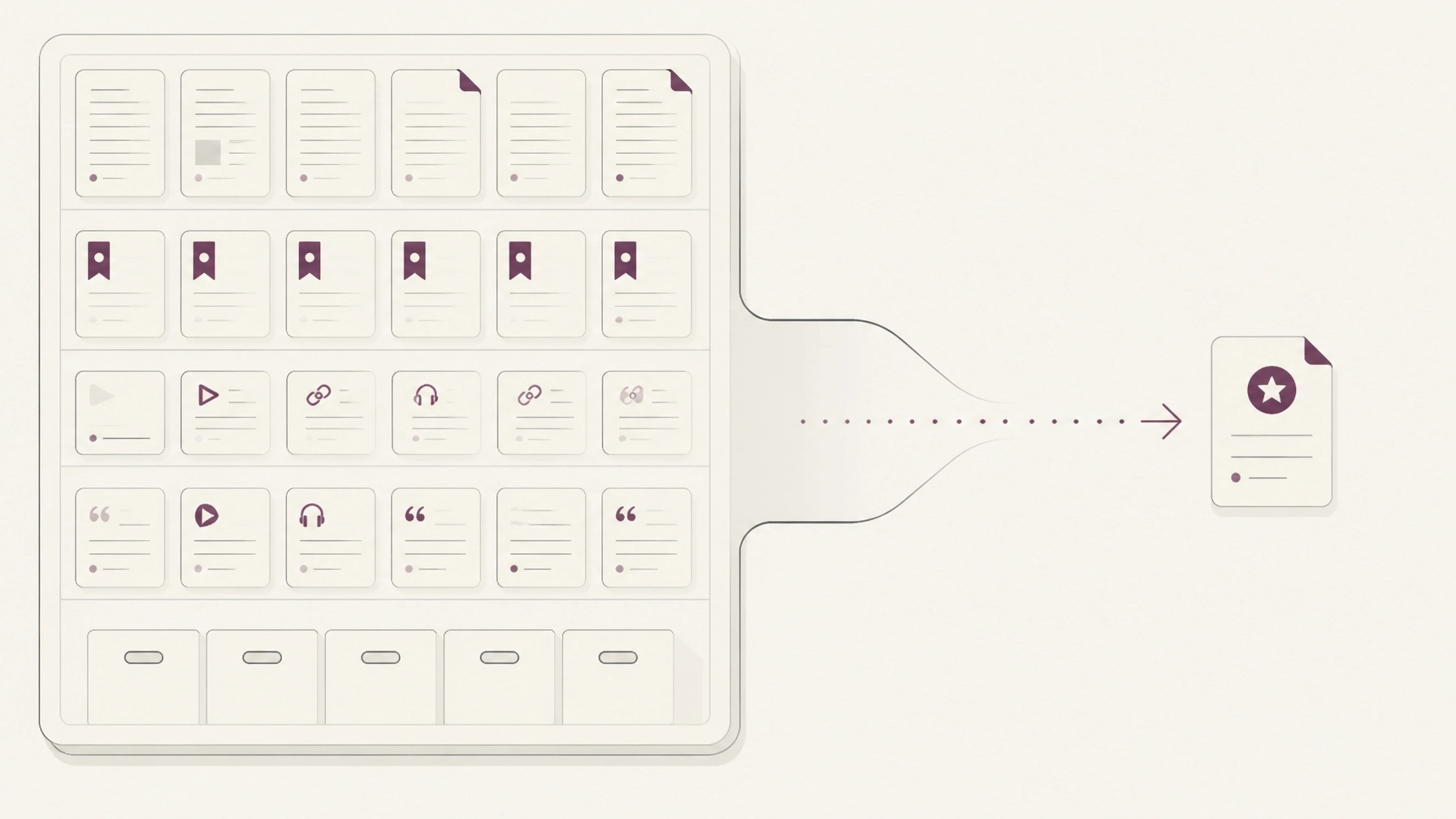
The library grows. The tags multiply. The inbox fills. The highlights become a record of what once seemed important. Months later, the material is still there: but the reason for saving it has faded.
This is the second brain trap: confusing the existence of stored information with the continued availability of understanding.
“Saving is not understanding.”
Omphalis, “Where Omphalis fits”
The system gets better at keeping, not returning
Most knowledge apps are very good at capture.
A browser extension saves an article. A reader syncs a highlight. A note-taking AI turns a conversation into a page. A knowledge management AI connects two concepts, suggests a tag, or produces a summary.
Each action is useful on its own.
The problem appears over time. Capture is visible and immediate. Retrieval is delayed, uncertain, and often difficult to measure.
You can see the number of notes in your library. You can see the unread count. You can admire the graph of linked ideas.
It is harder to see how often any of those ideas helped you write, decide, question, or understand something later.
That is where the system quietly changes character. The tool no longer supports a cycle of attention. It supports a one-way movement from the world into storage.
More in. Little back out.
Accumulation feels productive
Saving something creates a small sense of progress.
You have not read the paper yet, but it is now safe. You have not worked through the podcast, but its link is no longer at risk. You have not written the idea in your own words, but the highlight exists.
This is not foolish behavior. It is a reasonable response to an unreasonable volume of information.
Researchers save sources because they may become relevant later. Students collect explanations before an exam. Professionals keep reports, transcripts, and essays because their work depends on remembering what others have already thought.
The difficulty is that saving preserves access, not meaning.
A link can remain available while its context disappears. A highlight can remain accurate while the reason it mattered becomes obscure. A transcript can be searchable while the argument inside it remains hard to reconstruct.
The result is a library with plenty of material but few reliable paths through it.
In this sense, digital hoarding is not simply having too much. It is having too little relationship with what you have kept.
Retrieval is the real problem
A second brain is only useful if it helps you find and use something when the need arises.
That need is usually not, “What was the title of that article?”
It is closer to:
- Where did I encounter the argument against this approach?
- What evidence supported the conclusion I am considering?
- Which paper changed how I understand this question?
- What did I notice in that podcast six months ago?
- Does this new claim support or contradict something I already marked?
These are questions of return. They depend on context, structure, and personal judgment: not just full-text search.
Research on learning makes a related point. In a widely cited study, Karpicke and Roediger found that retrieval practice improves long-term retention. The act of bringing knowledge back to mind is not merely a test of memory. It helps strengthen memory.
Likewise, a major review by Dunlosky and colleagues identified distributed practice: returning over time: as one of the more effective learning techniques.
A knowledge system should therefore be designed around return.
Not only around whether it can store the paper, but whether it can help you re-enter the paper. Not only whether it can summarize the talk, but whether it can bring you back to the moment that changed your thinking.
The important unit is not the saved item.
It is the return point.
AI can make the pile grow faster
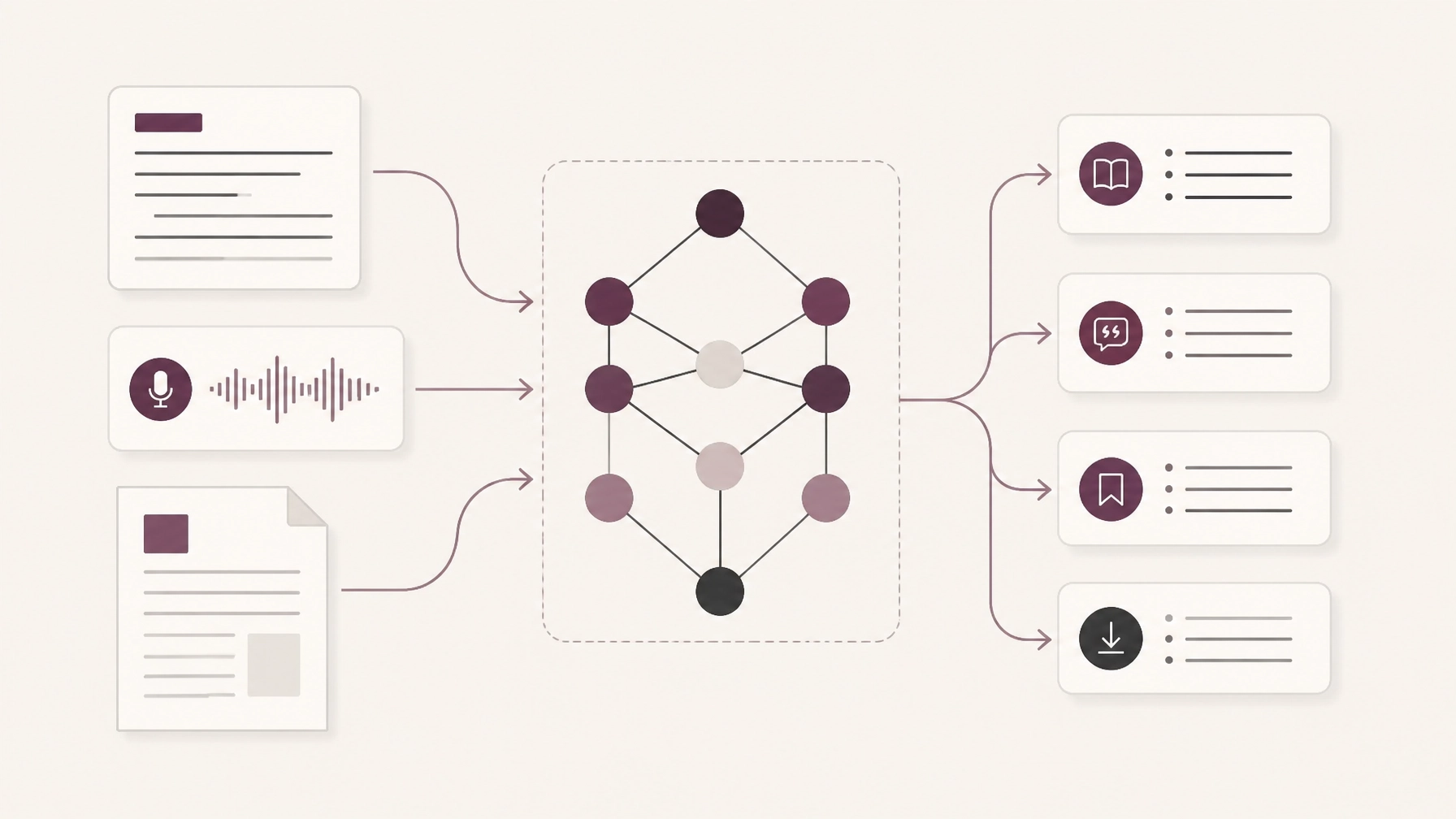
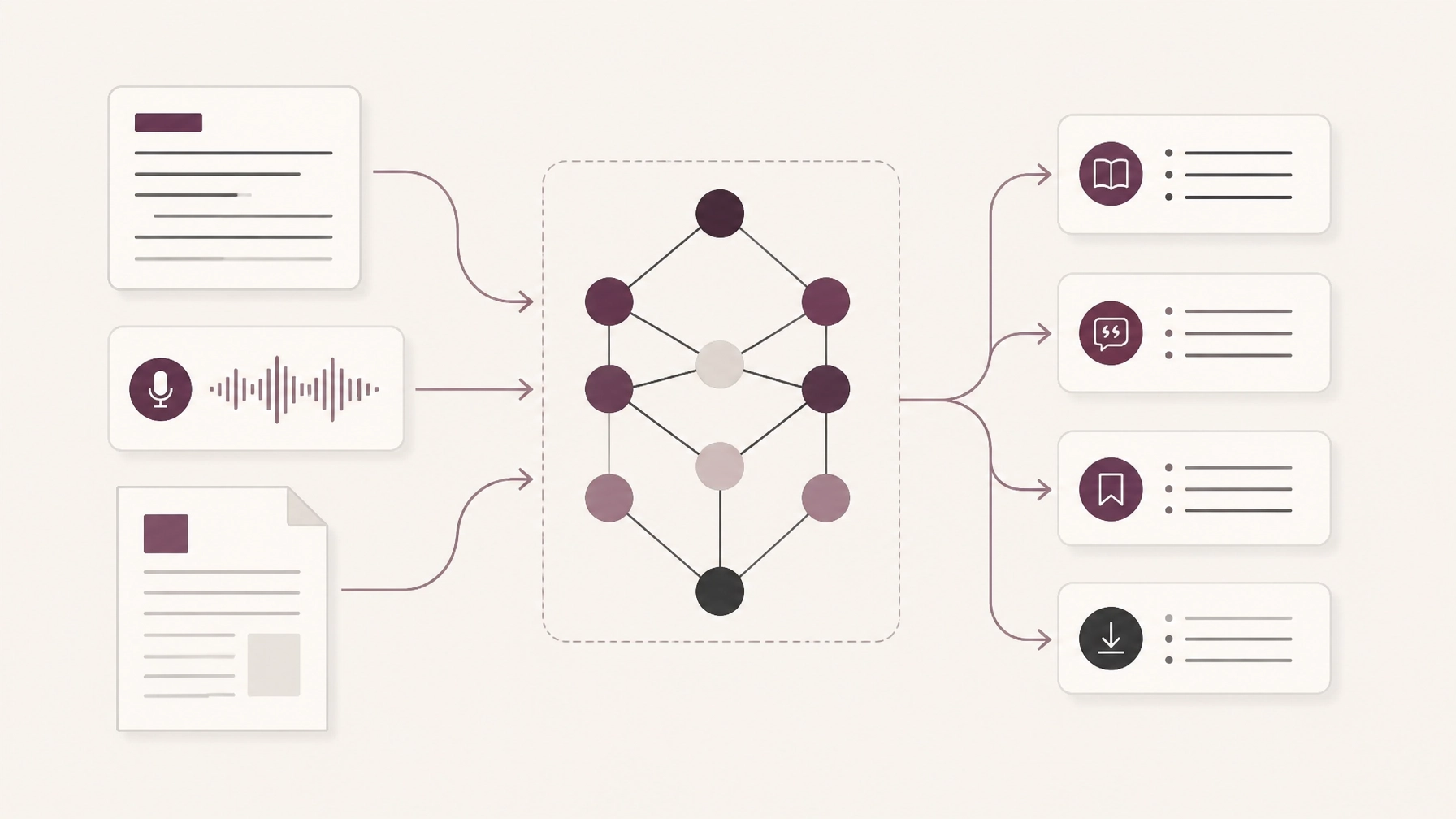
The rise of second brain AI, knowledge management AI, and note-taking AI has made capture more powerful.
A model can transcribe a meeting, extract action items, summarize a book, identify topics, and turn scattered notes into a polished document. These capabilities reduce friction, which is valuable.
But reducing the cost of saving can also increase the rate of accumulation.
If every article can become a summary, every meeting can become a searchable transcript, and every thought can become a structured note, the limiting factor is no longer storage. It is discernment.
What deserves a future return?
What belongs in your long-term understanding?
What should remain a temporary reference and then disappear?
AI does not answer these questions simply by producing more organized output. In fact, fluent output can make the problem harder to notice. A clean summary can create the feeling that the material has been handled, even when you have not formed a durable picture of the argument.
The distinction matters because comprehension is not the same as recognition.
You may recognize a concept when you see it again. That does not mean you can explain it, challenge it, connect it to another idea, or use it in a decision.
Research on reading comprehension often distinguishes between the literal words on the page, the propositions those words express, and the larger mental model a reader builds. A summary can help with the first two. The larger model still has to be built by the reader.
AI can assist that work.
It should not quietly replace it.
The missing layer is structure
The alternative to hoarding is not deleting everything.
Nor is it turning every source into a longer note.
The missing layer is structure: a clear view of how a piece is built and where its meaning gathers.
A dense paper has an argument. A long podcast has movements, shifts, and turning points. A video lecture introduces a question, develops a framework, tests it, and reaches a qualification or conclusion.
When that shape is invisible, returning becomes expensive. You have to search through the whole source again to find the section you half remember.
This is where a structural reading companion can play a narrower and more useful role.
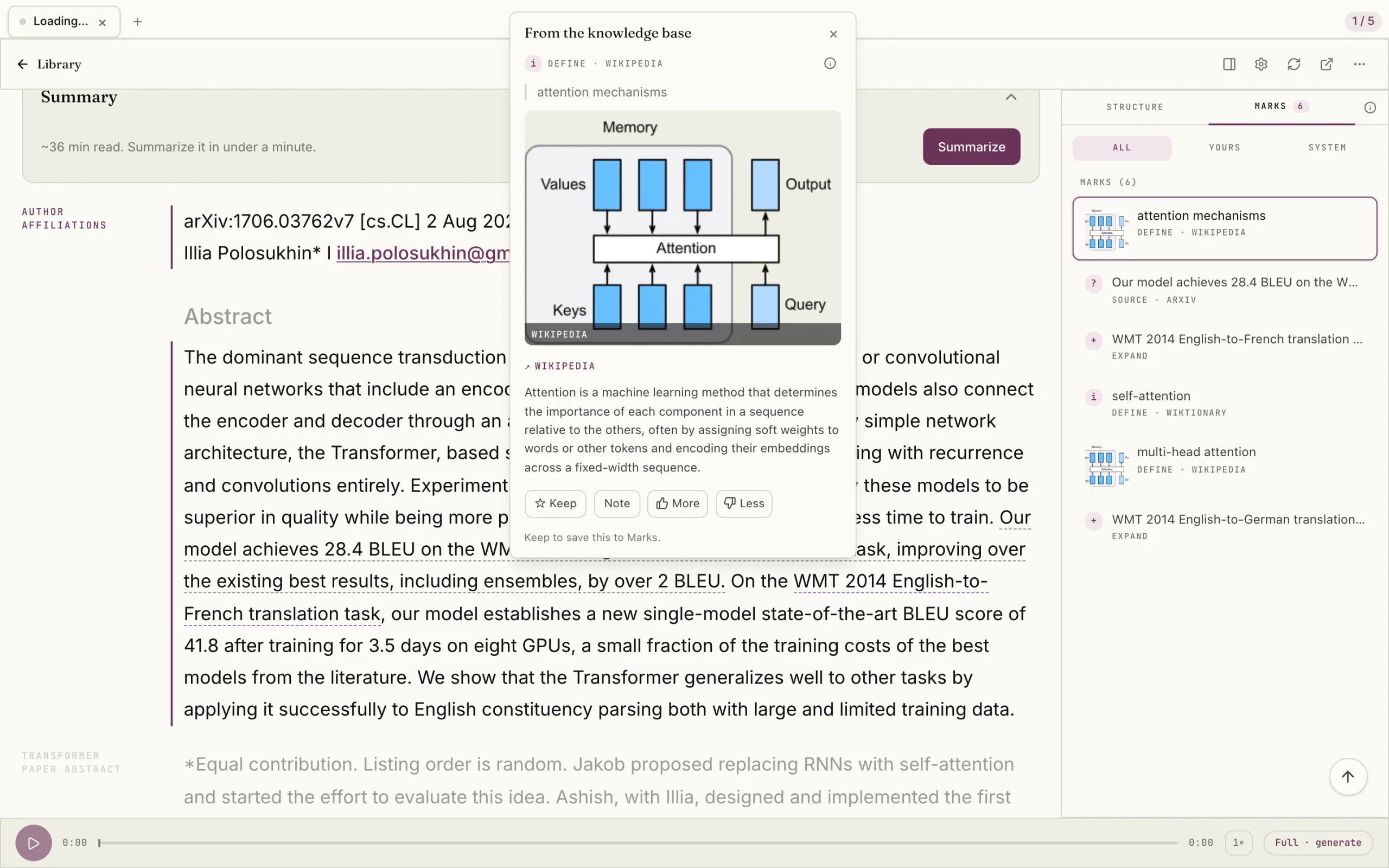
Omphalis cleans the source, lays out its structure, surfaces dense moments, and gives you a way to mark what matters while you are still inside the reading. It works with articles, PDFs, podcasts, videos, newsletters, and other long-form material.
The purpose is not to produce a substitute for the source.
It is to make the source easier to enter, follow, and revisit.
A structural map might show:
- where the piece begins;
- where its main claim appears;
- where the argument changes direction;
- where evidence or explanation becomes dense;
- where the conclusion depends on what came before.
That map gives your attention somewhere to stand.
A highlight is not yet a piece of knowledge
Highlights are useful, but they are often too thin to support future understanding.
You mark a paragraph because it feels important. Later, you see the paragraph again but cannot remember what you wanted to do with it.
A more durable mark includes a small act of interpretation.
Why did this matter?
What does it challenge?
What question does it leave open?
What should this be compared with?
The note does not need to be long. Its value is that it preserves your reason for stopping.
This is an important boundary for any note-taking AI. The system may identify a passage that appears dense. It may suggest a connection. It may explain a term or point to a related source.
But your mark should remain yours.
The reader’s judgment is not an inconvenient final step in an automated pipeline. It is the part that gives the material personal meaning.
Build for the next encounter
A useful knowledge system does not ask only, “What did you save?”
It also asks:
- What are you likely to need again?
- Where did your understanding change?
- Which ideas belong together?
- Which sources disagree?
- What did you mark before you knew why it mattered?
These questions point toward a different design philosophy.
The system should help you move:
- from saving to understanding;
- from fragments to coherence;
- from accumulation to return;
- from generic summaries to personal marks.
That does not mean every saved item needs to become a permanent part of your intellectual life. Some material is temporary. Some sources answer one question and can be set aside. A good system should make that acceptable rather than turning every unread item into a standing obligation.
What matters is that the pieces you choose to keep remain understandable.
For a researcher, that may mean returning to the exact passage behind a claim. For a student, it may mean seeing how an explanation connects to an earlier lesson. For a professional, it may mean finding the reasoning behind a decision rather than merely locating the document where it was recorded.
The aim is not a larger archive.
It is a more dependable path back.
The second brain should not become another place to hide
The appeal of a second brain is understandable. The world is full of material worth remembering, and human memory is selective.
But an external system cannot do the whole work of thinking on your behalf.
It can hold the source. It can reveal the structure. It can surface a possible connection. It can preserve the passage and the reason you marked it.
Then you still have to read, question, compare, and return.
That is not a limitation to apologize for. It is the point.
A knowledge system should support your judgment rather than claim authority over it. It should make difficult material easier to approach without making it sound trivial. It should help you carry ideas forward without pretending that storage alone creates understanding.
The best measure is not how much your second brain contains.
It is whether, when you need an idea again, it gives you a way back to why it mattered.
Sources and further reading
- Kintsch, “The role of knowledge in discourse comprehension: A construction-integration model”
- Karpicke and Roediger, “Test-enhanced learning: Taking memory tests improves long-term retention”
- Dunlosky et al., “Improving Students’ Learning With Effective Learning Techniques”
- The case for comprehension
- Where Omphalis fits