An AI PDF Summarizer Is Answering a Question You Didn't Ask
Updated · 8 min read
Listen to this post
Contents
Read the page. Find the turn. Keep the question.
An AI PDF summarizer can give you a useful account of what a document says. It can help you decide whether a long report deserves a closer read, or remind you of the subject of a paper you opened last month.
But a summary often answers a broad question: What are the main points?
The questions that bring you back to a document are usually more specific. Where does this argument turn? What does this paragraph rest on? Which qualification limits the result? What did the author leave outside the frame?
Those are not questions of length. They are questions of position.
A useful answer to another question
Summarization has a real place in reading. When you have a stack of papers to triage, a concise overview can help you choose where to begin. When you already know a report, a summary can make it easier to find your way back. Compression can be helpful when orientation is the task.
The difficulty begins when orientation is mistaken for understanding.
Imagine a researcher returning to a forty-page paper. The abstract and conclusion are familiar. A summary can restate the central claim and the reported findings. But the researcher is looking for something else: the sentence where the authors narrow their claim, or the assumption that makes their method useful for one population but not another.
A general summary may mention that qualification. It may not show how the qualification relates to the claim, where it appears, or what evidence supports it. To check, the reader has to return to the document anyway.
That is not a failure of every summary. It is a mismatch between the help offered and the question being asked.
A map can tell you where a path bends. A verdict can tell you where someone thinks you should end up. When you are still trying to understand the path, the map matters more.
Compression loses coordinates
A document is not simply a collection of points. Its claims depend on examples, evidence, definitions, methods, and limits. The meaning often sits in the relationships among them: a finding qualifies an earlier claim; an objection changes the direction of an argument; a method supports only a narrower conclusion than the abstract suggests.
A short summary has to select. That selection can be sensible and still leave out a detail that matters to your purpose. This is especially likely when your question is narrower than the document’s apparent topic. A summary designed for a general reader cannot know, without guidance, whether you are checking a method, preparing a lecture, or testing a claim against another source.
Research treats condensing a text and understanding it as related but distinct. A 2022 study of 155 undergraduates found that writing a synthesis of three texts did not, by itself, improve inferential comprehension over reading them; the organization and accuracy of the synthesis were what mattered (Castells Gómez, Minguela and Nadal, Reading and Writing). Work on argument explication goes the other way, using Toulmin's model to make a claim, its reason, and the warrant linking them explicit (Gupta, Zuckerman and O'Connor, ACL 2024).
Neither finding implies that summaries are inherently unreliable. They point to a different kind of work: seeing how an argument is built, not only what it concludes.
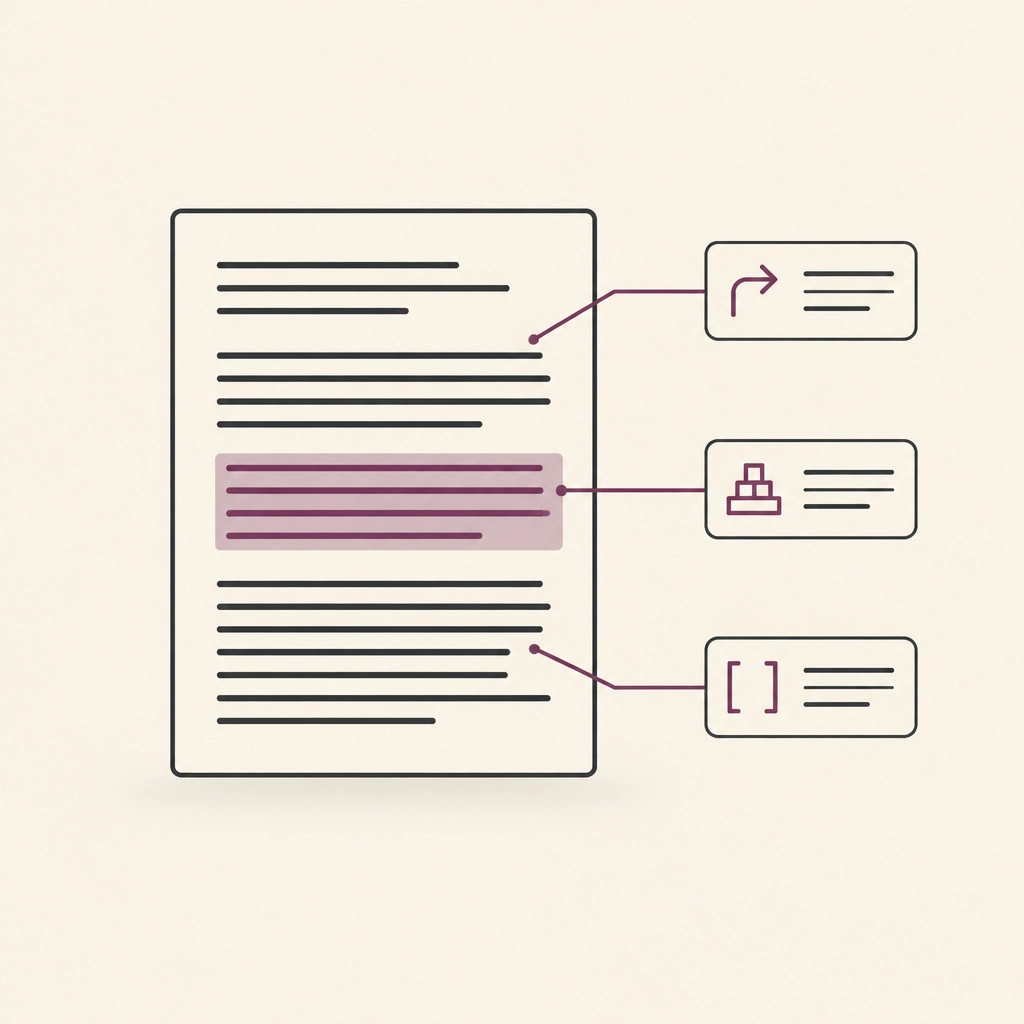
The questions worth asking are often local:
- What changes between this paragraph and the one before it?
- Is this result evidence for the claim, or only an example of it?
- Does the conclusion follow from the method described?
- Which people, conditions, or alternatives are not considered here?
Research on questions readers ask while reading likewise suggests that people are interested in more than locating a fact in the text. They ask about reasons, implications, background, and gaps. Those are questions about how a passage works in context, not just what it says. (Inquisitive Question Generation for High Level Text Comprehension)
A quiet caveat: a careful summary can preserve qualifications, and a careless reading can miss them. The point is not that summaries always flatten complexity. It is that compression cannot guarantee the particular coordinates your question requires. When the distinction matters, the source remains the place to check.
“A summary helps with the textbase. Lasting understanding lives in the situation model…”
The question belongs beside the passage
Suppose a paragraph says that an intervention was associated with improved outcomes, then adds that the study was observational. The headline summary might preserve the reported improvement. Your question may be whether the study establishes causation.
A useful response should not simply return a shorter version of the paragraph. It should help you inspect the distinction: what the authors observed, what they infer, and what the design does not establish. The answer should point back to the passage, not ask you to accept a detached verdict.
This is why the place where assistance appears matters. If you leave the PDF, copy a paragraph into a separate tool, and return later, you have to reconstruct your place in the argument. Sometimes that is perfectly fine. For a quick definition or a one-off question, a separate chat can be useful. During close reading, though, help is more useful when the source stays visible and the explanation can be checked against its neighbors.
An AI reading assistant should not take the document out of your hands. It should make a difficult passage easier to enter.
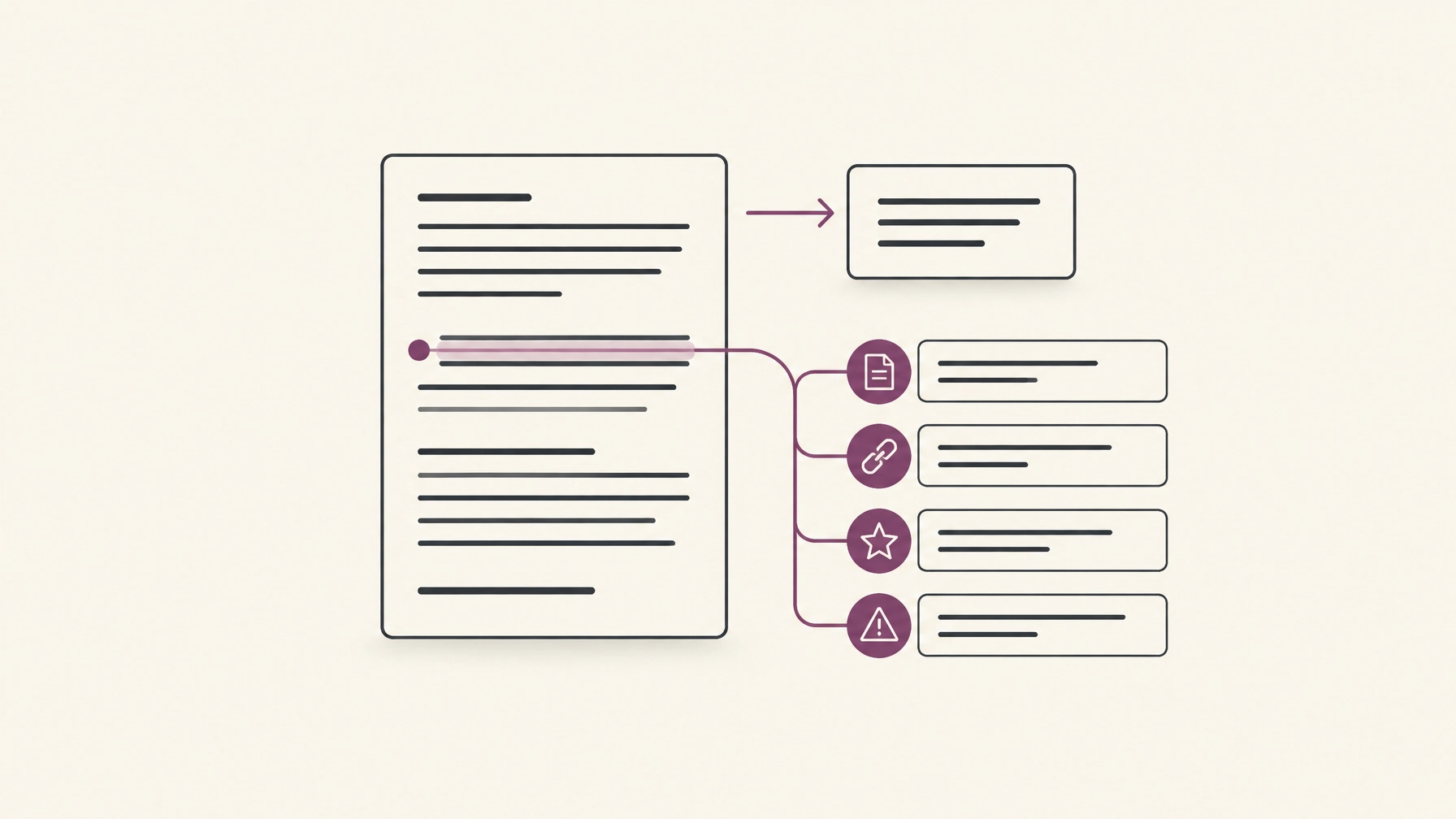
In Omphalis’s PDF reader, a section map can help you orient within a long file. You can mark a passage, attach the question that made you stop, and return to it with its surrounding text in view. An explanation can clarify a selected span while you remain in the source. These are small forms of help, designed to keep the work of judgment with the reader.
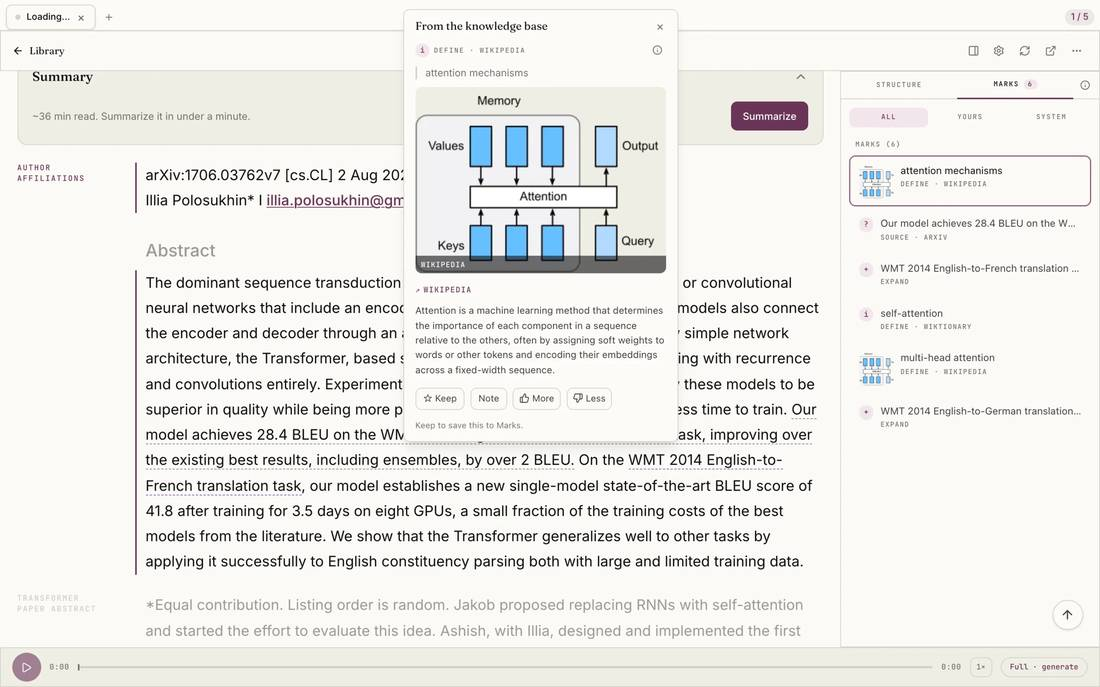
The distinction is not between using AI and refusing it. It is between assistance that opens a document and assistance that makes the document feel finished before you have met its argument.
“The reader of record is still you.”
Keep what you noticed
A summary records a model’s selection of what seems central. A mark can record why you paused.
That reason might be “check the sample size,” “this conflicts with the earlier paper,” or simply “I don’t understand what this term means here.” The note need not be polished. Its value is that it preserves your question alongside the passage that prompted it.
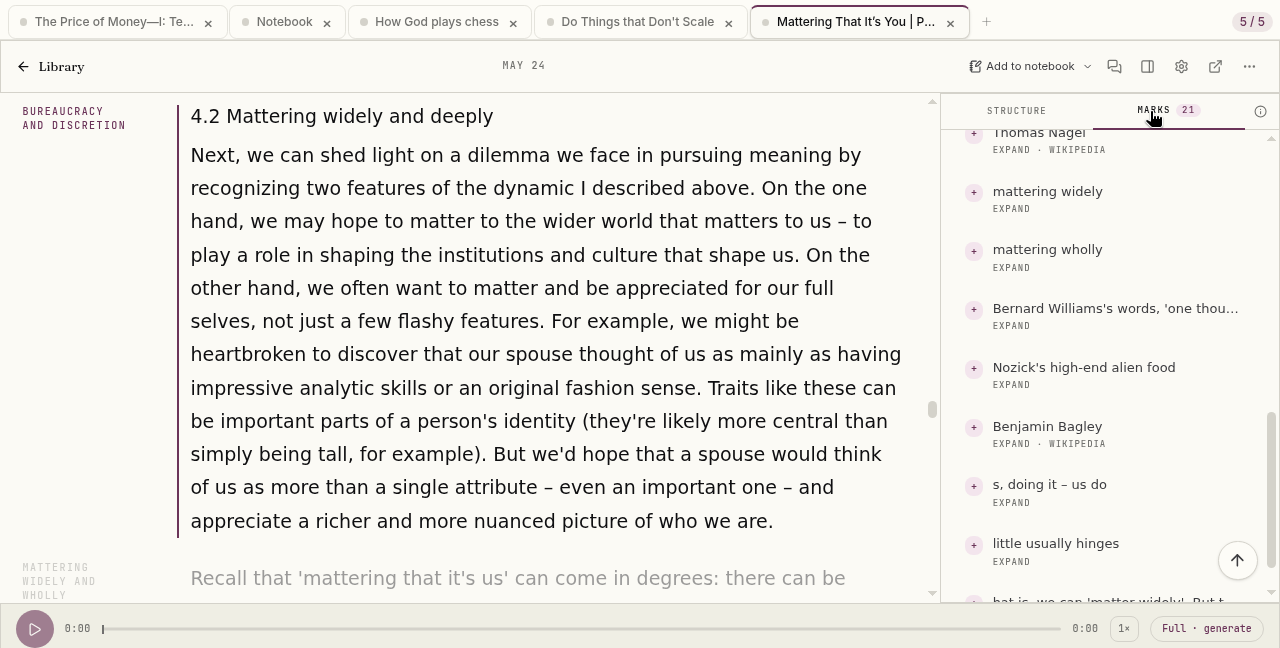
On a later reading, the highlight alone may look familiar without telling you what you meant to do. A note gives you a way back: the words, the context, and your own unfinished thought. In the PDF reading view, marks stay connected to the passage so you can return to the source rather than treating excerpts as free-floating facts.
There are limits to this approach, too. Extracted text may not preserve every feature of a PDF’s layout. A figure, table, equation, footnote, or scan may carry meaning that is harder to inspect in a text view. For those cases, keep the original page nearby and verify the evidence in its original form. A reading companion should make those checks easier to remember, not imply that they are unnecessary.
Let the summary open the door
A summary can be a good first step. Use it to learn the topic, decide whether a source is relevant, or find a section worth reading closely. Then ask the questions the summary cannot settle for you.
Where does the claim change? What evidence carries it? Which caveat narrows it? What would I need to see before relying on this conclusion?
That sequence leaves room for both tools and habits. A summary can orient you. A PDF reader AI can help you navigate, explain a difficult passage, and keep your own marks attached to the source. Your reading supplies the comparison, the skepticism, and the interpretation.
In short, the goal is not to refuse compression. It is to know what compression can and cannot answer. If you need a quick account of a document, a summary may be enough. If you need to understand why a claim holds, or where it does not, you need more than a verdict.
You need a way into the argument, and a way back to the place where your question began.
Not a pile of conclusions. A path through the source.
If a paper is waiting in your library, start with one passage that makes you pause. Mark the question beside it. Return when you are ready to follow the thread.